

Consumer Information
Milwaukee Area Technical College is required by law to make available to enrolled and prospective students and their parents certain information about its operations. Such information pertains to:
Institutional Information
Academic Programs
Website: https://www.matc.edu/academics/
Accreditation
Website: https://www.matc.edu/who-we-are/reports-facts-data/accreditation/
Milwaukee Area Technical College is accredited through the Higher Learning Commission (HLC) with reaffirmation scheduled for 2028-2029.
Code of Conduct- Students
Office of Student Life
Phone: 414-234-6691, 414-510-5680
Email: studentlife@matc.edu
Website: https://www.matc.edu/student-life-resources/student-life/
Student Life also handles student disciplinary procedures and helps students become involved in campus policy decisions.
Office of Student Employment
Phone: (414) 297-6244
Website: https://www.matc.edu/employer-services-resources/for-students/index.html
Cost of Attendance
Office of Student Financial Aid
Phone: (414) 297-6282
Email: finaid@matc.edu
Website: https://www.matc.edu/costs-scholarships-aid/estimated-costs-info.html
Office of the Registrar – Per Credit Tuition Rates
Phone: (414) 297-6824
Email: register@matc.edu
Website: https://www.matc.edu/costs-scholarships-aid/tuition-fees.html
Fee amounts are available when you register. Fees for tuition and material fees for instructional materials consumed by students and instructors are required by s. 38.24, Wis. Stats.
Facilities
Office of Building Operation Services
Phone: (414) 297- 6677
Email: dmcoperations@matc.edu
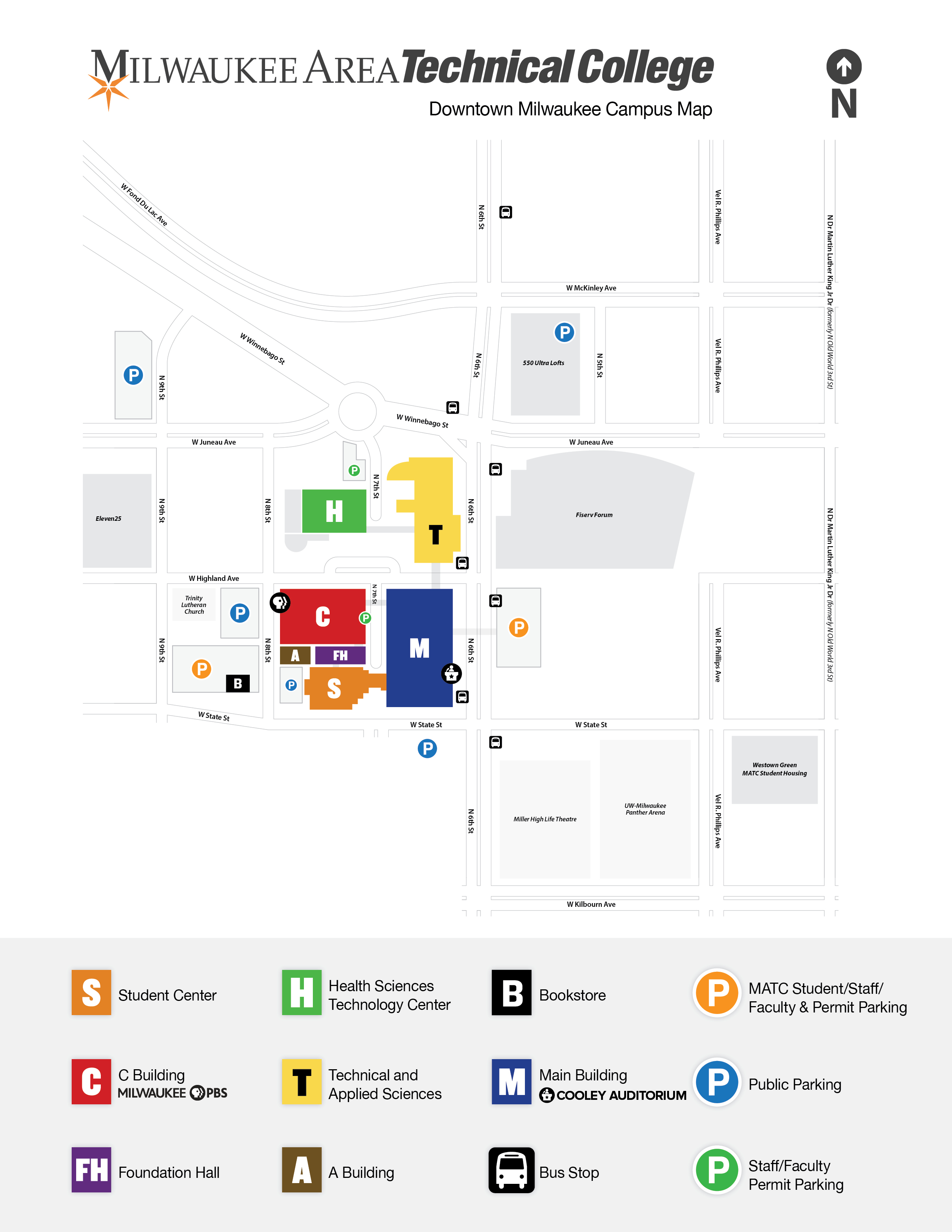
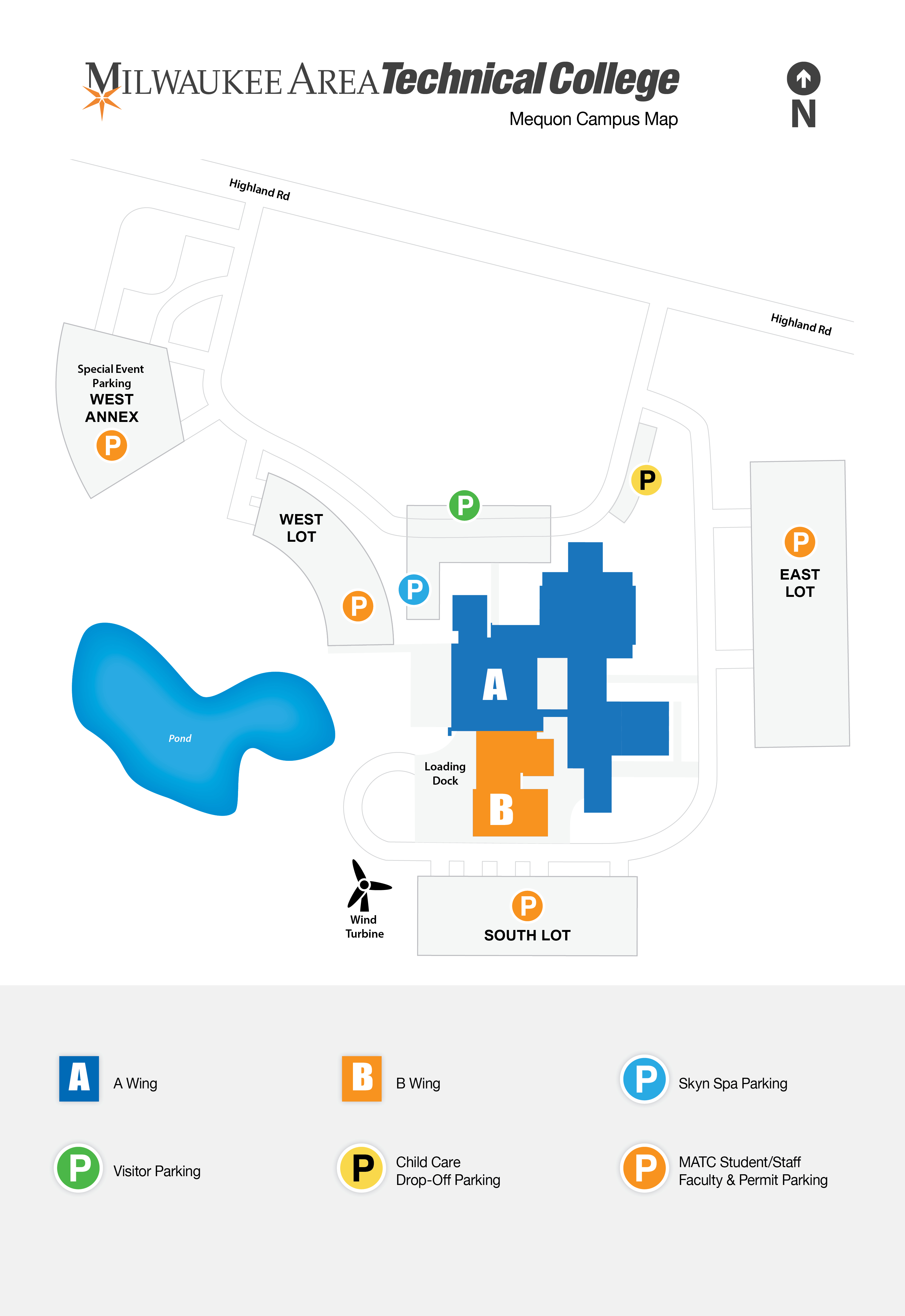
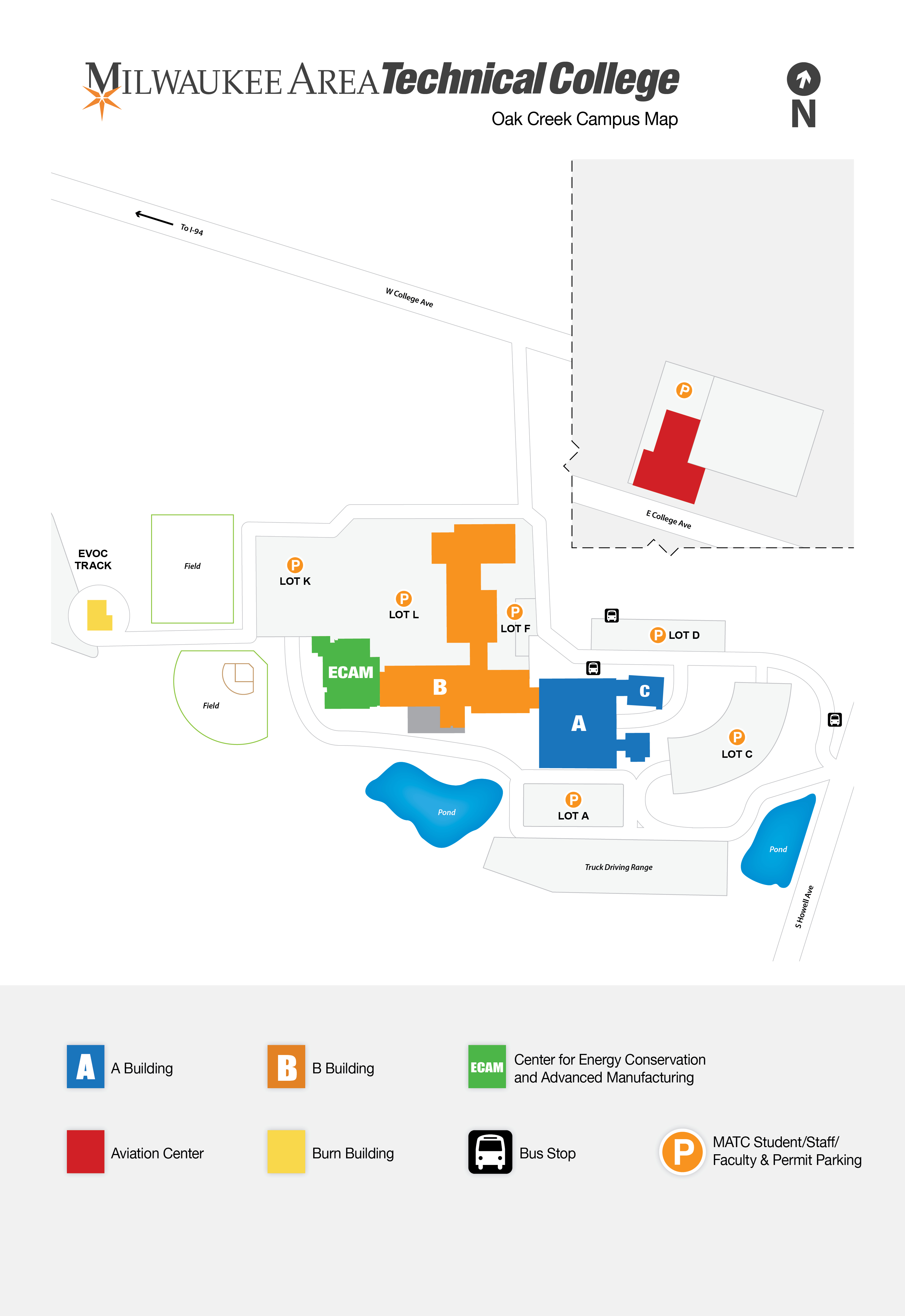
Campus Maps
Downtown Milwaukee: https://www.matc.edu/visit/matc-downtown-campus_4.jpg
Mequon: https://www.matc.edu/visit/mequon-campus-map-north.jpg
Oak Creek: https://www.matc.edu/visit/oak-creek-campus_2.jpg
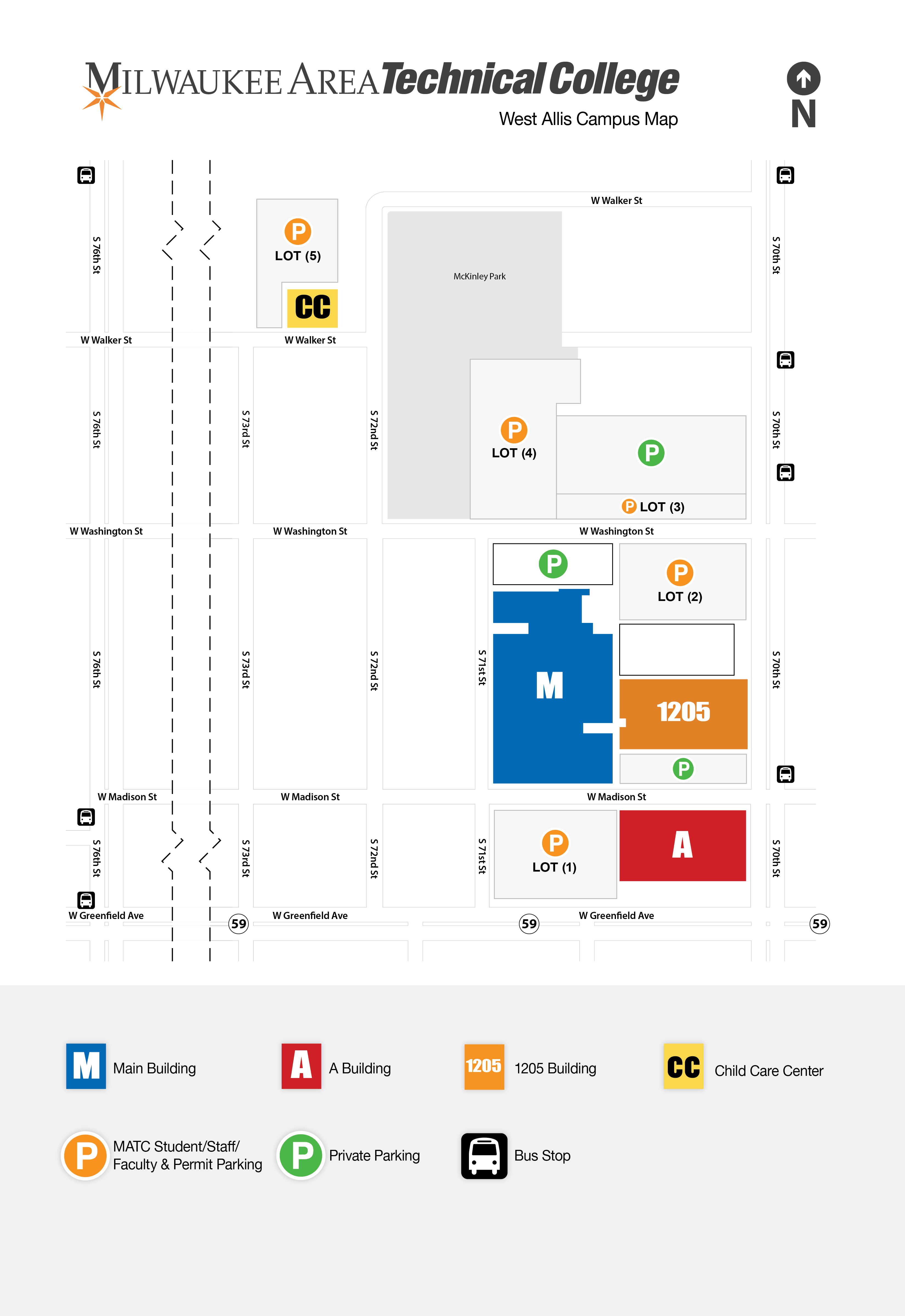
West Allis: https://www.matc.edu/visit/west-allis-campus_north.jpg
Financial Assistance Information
Financial Aid
Office of Student Financial Aid
Phone: (414) 297-6282
Email: finaid@matc.edu
Website: https://www.matc.edu/costs-scholarships-aid/financial-aid.html
Drug & Alcohol Prevention
Drug-Free Schools & Campuses Annual Notification 2026-2027
Milwaukee Area Technical College (“College”) adopts the following Drug- Free Workplace Policy and Program pursuant to the federal “Drug-Free Workplace Act of 1988” and provides this notification to students and employees in compliance with annual notification requirements.Standards of Conduct
MATC Policy 0300 – Drug Free Campuses and Workplace prohibits the unlawful manufacture, distribution, dispensation, possession, or use of a controlled substance including but not limited to alcohol, prescription and illicit drugs at any college campus, evening center, or other college premise; or while participating in officially sponsored college events off premise.Violations of this policy will result in appropriate progressive disciplinary action up to and including: (a) expulsion of students in accordance with applicable civil, state, and federal law and the MATC Student Code of Conduct; (b) termination of employment from MATC in accordance with applicable civil, state, and federal law; and (c) referral for prosecution for violations.
Each College employee will, as a condition of employment, abide by this policy. In addition, any employee engaged in the performance of a federal grant or contract is required to notify his or her supervisor no later than five (5) days after any conviction under a criminal drug statute for a violation that occurred in the workplace.
Legal Standards
State Law: The Uniform Controlled Substances Act, Chapter 961 of the Wisconsin Statutes, regulates controlled substances and outlines specific penalties for the violation of the regulations. A person convicted of manufacturing a controlled substance, delivering a controlled substance, or possessing a controlled substance with an intent to manufacture or deliver, can be imprisoned for up to 30 years and fined up to $1,000,000. Penalties vary according to the type of drug involved, the amount of drug confiscated, the number of previous convictions, and the presence of any aggravating factors. See Wis. Stat.s §961.41-50.
Wisconsin law also restricts the use of alcohol in certain situations such as procurement, dispensing, or selling alcohol under the age of 21. See Wis. Stat.s §125.07. Penalties may include significant fines, required participation in a supervised work program, and suspension of driver’s license.
Federal Law: Pursuant to federal law, the United States Sentencing Guidelines establish mandatory minimum penalties for categories of drug offenses and provide for penalty enhancements in specific cases. See 21 U.S.C. §841-865.
Health Risks
According to the National Institute on Drug Abuse (NIDA), addiction is when people who use drugs can't stop taking a drug even if they want to. People start taking drugs and alcohol for a number of reasons including: socialization, boredom, coping with a loss, and loneliness. No one plans to get addicted. Use of drugs or alcohol can quickly become abuse as the person becomes dependent on the drug just to feel normal. That is addiction, and it can quickly take over a person's life.Addiction is a disease, just as diabetes and cancer are diseases. Addiction is not simply a weakness or personality flaw. People can enter recovery and go on to maintain normal life activities. People from all backgrounds, rich or poor, can become addicted. Addiction can happen at any age, usually in adolescence or early adulthood but older adults and those experiencing trauma or changes in their lifestyle are also vulnerable. If you believe you are at risk of addiction, or are addicted to drugs or alcohol, the College offers the resources outlined below. Please contact us.
Symptoms
It is important to recognize the symptoms of drug and/or alcohol abuse. People with addiction might act differently than they used to. They might:
- spend a lot of time alone
- lose interest in their favorite things
- get messy—for instance, not bathe, change clothes, or brush their teeth
- be really tired and sad
- be very energetic, talk fast, or say things that don't make sense
- be nervous or cranky (in a bad mood)
- quickly change between feeling bad and feeling good
- miss class, work, or meetings/appointments
- fall asleep during class or work
- eat a lot more or a lot less than usual
People with an addiction usually can't stop using on their own. They want and need more. They might try to stop taking the drug and then feel really sick, so they continue or resume using. They may even keep using drugs or alcohol even though it's causing terrible family, health, or legal problems. They need help to stop using drugs or alcohol. Drug treatment can help.
Resources
MATC encourages employees and students with substance abuse problems or concerns to seek confidential counseling and/or referral services.Conscientious efforts to seek such help shall not in themselves jeopardize any employee’s job or student’s enrollment and will not be noted in the employee or student file. The following is a list of drug and alcohol abuse resources.
Naloxzone
To continue ensuring the safety of Milwaukee Area Technical College students, staff, faculty and community, NARCAN®, a medication that can save the life of someone experiencing an opioid overdose, is available at all MATC campuses and the Education Center at Walker’s Square.Doses of NARCAN® are stored in Nalox-ZONE (NZ) boxes provided by Wisconsin Voices for Recovery, and are ready to use in an emergency or in anticipation of an emergency. Usage instructions are available on each dose of the medication.
Nalox-ZONE boxes are located at:
Downtown Milwaukee Campus, 700 West State Street
● M Building, 2nd floor near Room M252
● S Building, 3rd floor cafeteria (Room S312)
● H Building, 3rd floor bridge to T Building
● C Building, 2nd floor across from restroom (C251)
Mequon Campus, 5555 West Highland Road
● A Building, 1st floor cafeteria (Room 101)● B Building, 1st floor near Room B200
Oak Creek Campus, 6665 South Howell Avenue
● A Building, 1st floor cafeteria● B Building, 1st floor vestibule between A and B buildings
West Allis Campus, 1200 South 71st Street
● Main Building, 1st floor cafeteria
Walker’s Square Education Center, 816 West National Avenue
● 1st floor, near men’s restroom
Public Safety |
|
|---|---|
| MATC Public Safety Emergency | (414) 297-6200 |
| MATC Public Safety Non-Emergency | (414) 297-6588 |
MATC Student Resources |
|
|---|---|
| MATC Mental Health Counseling Services | counseling@matc.edu, MATC CAPS (414) 297-7582 |
| 24/7 Mental Health Crisis Support Line | (414) 297-7582 (option 1) |
| Carlos Aranda, LPC (Bilingual Spanish) | arandac@matc.edu, (414) 297-7376 |
| Kate Cunningham, LPC | cunnink5@matc.edu, (414) 297-8389 |
| Nicole Gustafson, LPC | gustafnv@matc.edu, (414) 571-4566 |
| Nicole Wheatley, LPC | wheatlen@matc.edu, (262) 238-2469 |
| Mental Health Community Partners of Wisconsin | www.mhawisconsin.org, (414) 276-3122 |
MATC Employees |
|
|---|---|
| Aurora Employee Assistance Program | (800) 236-3231 |
Community Resources (Students and Employees) |
|
|---|---|
| IMPACT Alcohol and Other Drug Abuse Services--Substance Abuse Assessments and related treatment referrals | (414) 256-4808 |
| 211 IMPACT--Milwaukee County Community Resource Hotline. Point of access for AODA, Mental Health, Family, Health and Social Services | 211, (866) 211-3380 |
| Milwaukee County (DHHS) Harm Reduction Vending Machines | HarmReductionMKE.org |
| Alcoholics Anonymous Central Office--24hr Hotline and meeting information. Support for those in and seeking recovery | aamilwaukee.com, (414) 771-9119 |
| Alanon Family Groups (Help for Family and friends affected by another’s alcohol dependence) | alanon-wi.org, (414) 257-2415 |
| Alateen (Young Alateen members, usually teens affected by a family member’s drinking) | alanon-wi.org, (414) 257-2415 |
| Aurora Health Care--Private Pay and Insurance (Dewey Center for Substance Abuse treatment and Psychiatric services available) | (414) 454-6600 |
| Rogers Behavioral Health | (414) 865-2500 (Brown Deer), (414) 327-3000 (West Allis) |
| SAMHSA (Substance Abuse and Mental Health Services Administration) AODA and Mental Health resources and data | www.samhsa.gov |
Drug and Alcohol Programs
In addition to the external resources listed above, the College has created a drug-free awareness program to inform faculty, staff, and students about the dangers of drug abuse in the workplace and school community. Events are shared in The Week Ahead communication.
Consumer Information for Student Athletes
Office of Athletics
Phone: (414) 297-6448
Email: stormers@matc.edu
Website: http://matcstormers.com
Graduation and completion statistics for athletes: This information is currently under review and will be updated shortly.
For a copy of the report sent to the Equity in Athletics Data Analysis (EADA) please visit https://ope.ed.gov/athletics/#/
Student Right-to-Know Act
In accordance with the Student Right-to-Know and Campus Security Act of 1990 and Higher Learning Commission accreditation standards, Milwaukee Area Technical College (MATC) provides public information on student achievement, including retention, graduation and transfer, required licensure exam pass rates, and job placement. These requirements ensure transparency for all institutions receiving federal financial assistance.
Student Achievement Data
Retention Rates
Retention rates measure the percentage of first-time-in-college students who started in a given fall and either earned a credential or returned to MATC to continue their studies the following fall.
| starting term | Fall 2024 | Fall 2023 |
Fall 2022 |
Fall 2021 |
|---|---|---|---|---|
| full-time | 60% | 64% | 61% | 53% |
| part-time | 50% | 50% | 48% | 44% |
IPEDS Benchmarks — Retention (link)
Source: Wisconsin Technical College System – Retention. Student populations excluded from data: district/state certificates, basic skills, community education and course takers.
Graduation Rates
The overall graduation rate tracks the progress of students who began their studies at MATC as full-time, first-time degree- or certificate-seeking students in a given fall semester to see if they complete a degree or other award such as a certificate within 150% of “normal time” for completing the program in which they are enrolled. For example, “normal time” for earning an associate degree is considered three years or a year-and-a-half for a one-year technical diploma.
Transfer-out rate is the percentage of full-time, first-time degree- or certificate-seeking students who transferred to another institution without completing a credential at MATC.
| starting term | Fall 2022 | Fall 2021 |
Fall 2020 |
Fall 2019 |
|---|---|---|---|---|
| Graduation rate | 32% | 25% | 25% | 15% |
| Transfer-out rate | 13% | 16% | 14% | 12% |
IPEDS Benchmarks — Graduation (link)
Source: Wisconsin Technical College System – Graduation. Student populations excluded from data: district/state certificates, basic skills, community education and course takers. Cohort year refers to the academic year in which students started their education.
Industry-based Licensure Exam Pass Rates
Some intended careers of MATC’s programs have external credentialing or licensure requirements. These requirements are tracked to ensure students have strong opportunities to enter their field.
Licensure Exam Pass Rates (pdf)
Job Placement
Each fall, MATC conducts a graduate outcomes survey to learn about employment status, salary, job titles and satisfaction with their MATC education. Job placement data is based on responses to a survey six months after the student graduates from MATC.
Graduate Career Report (pdf)
IPEDS Outcome Data
The Integrated Postsecondary Education Data System (IPEDS) gathers information from every college, university, and technical and vocational institution that participates in federal student financial aid programs. MATC reports IPEDS data on enrollment, program completion, graduation, faculty and staff, finances, institutional prices, and student financial aid to the US Department of Education’s National Center for Education Statistics (NCES). The College Navigator website is a public resource where a summary of institutionally reported IPEDS data can be found and easily compared. The following link is to the college data available, including retention and completion rates.
Understanding the Data
The "Student Right-to-Know" graduation rate focuses on a specific group: first-time, full-time students tracked over a three-year period. Under these guidelines, a student is counted as a "success" if they complete their program within 150% of the standard timeframe.
For example:
- Associate Degree: Completion within three years.
- One-Year Diploma: Completion within one and a half years.
Why This Only Tells Part of the MATC Story
While these statistics offer a baseline for comparison, they do not provide a complete picture of the MATC community:
- Part-Time Focus: The federal metric only tracks full-time students. However, a significant portion of the MATC student body attends part-time while balancing work and family commitments, often taking longer to reach their milestones.
- Diverse Goals: Many students achieve their personal educational objectives—such as gaining specific technical skills for a job promotion or transferring to a four-year university—without necessarily completing a full degree or diploma at MATC.
- Broad Impact: Because the federally defined cohort is so specific, these mandated figures represent only a small fraction of the thousands of students who walk through MATC’s doors to transform their lives each year.
MATC is committed to the success of every student, whether they are pursuing a short-term certificate, a two-year degree, or personal/professional development.
Clery/Campus Security Act
In compliance with the Jeanne Clery Disclosure of Campus Security Policy and Campus Crime Statistics Act (Clery Act), MATC publishes an Annual Security and Fire Safety Report, which is available to all current and prospective students and employees. Hard copies can be obtained from any MATC Public Safety office during normal business hours. See the following links for an electronic version of the report or to report crimes.
- Annual Security & Fire Safety Report (link)
- Public Safety Department (link), (414) 297-6588
- Speak Up for Safety (link)
FERPA
Confidentiality –Family Educational Rights & Privacy ACT (FERPA)
Office of the Registrar
Phone: (414) 297-6824
Email: register@matc.edu
Website: https://www.matc.edu/admissions-registration/registration-records/ferpa.html
The federal law governs the privacy of student educational records, access to those records and disclosure of information from them.
Safeguarding Customer Information
Office of the General Counsel
Phone: (414) 297-7307
Email: kutlacaj@matc.edu
Procedure: HH0101-1 (pdf)
Procedure: FF0100-A (pdf)
Policy : B0203 (pdf)
Procedure: FF0100 (pdf)
Misrepresentation
Office of the General Counsel
Phone: (414) 297-7307
Email: kutlacaj@matc.edu
Loan Disclosures
Student Loans
Office of Student Financial Aid
Phone: (414) 297-6282
Email: finaid@matc.edu
Website: https://www.matc.edu/costs-scholarships-aid/loans.html
Milwaukee Area technical College is committed to promoting student success through responsible student loan borrowing. Student loans are borrowed money that has to be repaid, with interest, to the U.S. Department of Education.
The U.S. Department of Education offers low-interest loans to eligible students to help cover the cost of education. Students may be eligible to receive subsidized and unsubsidized loans based on their financial need. For additional information on Federal Subsidized and Federal Unsubsidized loans visit Types of Federal Loans