








If we get one chance with a student, we must turn it into a moment where they feel heard, valued and supported.

Staff members accompanying new students to their classrooms.
Instructors reminding students when and where they hold office hours.
Supervisors acknowledging jobs well done.
The smallest moments can make the biggest impact on students at Milwaukee Area Technical College.
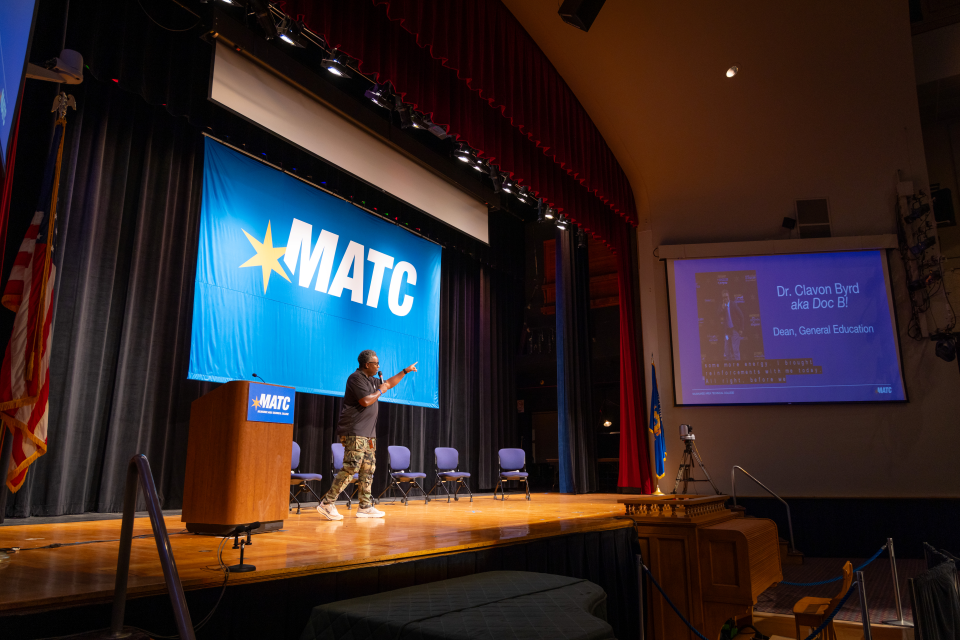
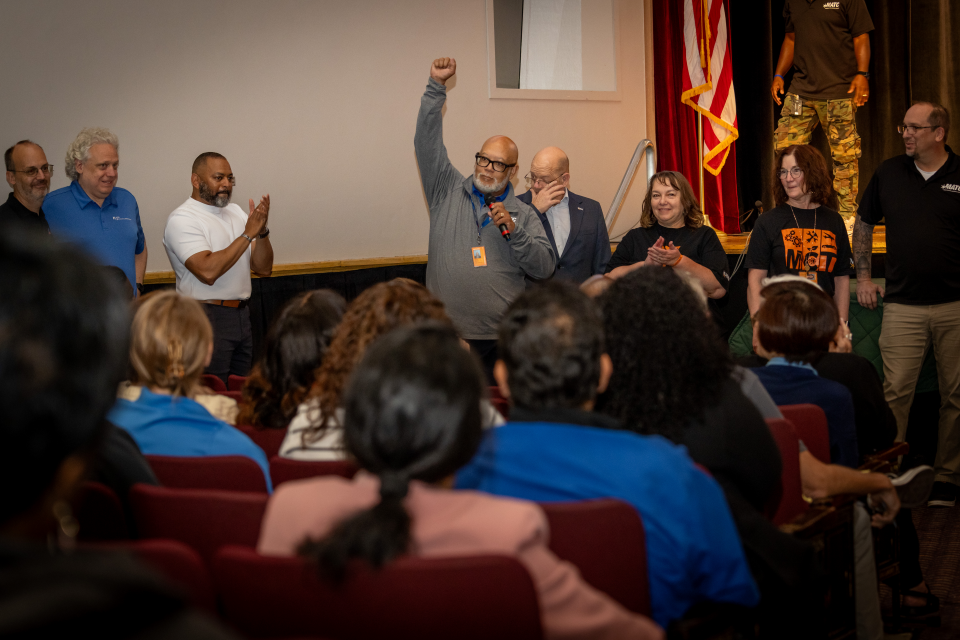
That was the message delivered to faculty and staff on Thursday, August 20, at MATC’s Academic Year Kickoff, a two-day event to celebrate the start of the Fall 2026 semester.
Engaging in such casual, intentional exchanges will help the college thrive during the 2026-27 school year, MATC President Dr. Anthony Cruz told the approximately 600 attendees.
“You might interact with 50 students this week. To you, it may feel like routine work. But to that student, that single interaction might be their only touchpoint with us that day. That impression stays with them,” Dr. Cruz said. “If we get one chance with a student, we must turn it into a moment where they feel heard, valued and supported.”
For Andrea Theberge, a student in the Medical Laboratory Technician program, that happened when an advisor encouraged her to become a tutor. “I was back in school for the first time in 15 years, and I didn’t even know if I knew how to study,” Theberge said. “But that suggestion lit a fire under me.”
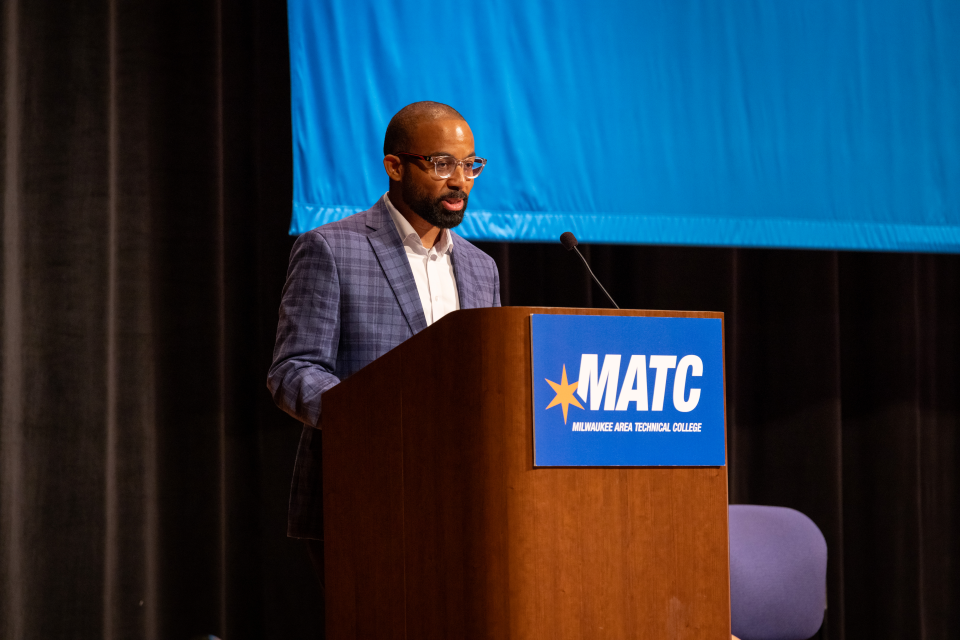
Dr. Cruz delivered his remarks in Cooley Auditorium at the Downtown Milwaukee Campus. His remarks were broadcast to the college’s Mequon, Oak Creek and West Allis campuses.
In his speech, Dr. Cruz outlined his vision for what the college needs to do in the upcoming academic year to stay viable and successful while facing challenging fiscal constraints.
“Our students carry immense burdens outside of these walls. We must never become another barrier in their lives,” Dr. Cruz said. “We must be the stairway to their success.”
The college also is dealing with structural financial challenges, he said. “Our budget deficit is real, state funding is not keeping pace with inflation, and costs continue to rise,” Dr. Cruz said. “Simply balancing a budget year-to-year through incremental cuts is not a long-term strategy. The viability of MATC depends entirely on how effectively we serve our community and adapt to who our students actually are today.”
Dr. Cruz urged all employees to consider modifying their systems and processes to better serve part-time students, a group that makes up 95% of the college’s total enrollment.
“Great organizations do not wait for external forces to break them; they change with the times proactively,” Dr. Cruz said. “We need to be more nimble, more flexible and willing to evaluate the time, place and modality of how we deliver education.”
During the Fall semester, the college will collect ideas and input on how to alter those delivery methods. Once changes are made, employees need to support them and each other, Dr. Cruz said.
“We are all in this together. The work ahead will require open dialogue, mutual respect and a shared commitment to continuous improvement,” he said. “But if we keep our students at the center of every decision, I have no doubt that MATC will not only navigate these changing times — we will thrive.”
Connecting with students to help them belong and succeed was the topic of a panel discussion held after Dr. Cruz’s remarks. Administrators, staff members and students talked about the importance of mentoring and how it helps students feel like they matter.
When students feel they belong, they are more likely to engage, persist and finish what they start, said Michael Rogers, vice president of Student Engagement and Community Impact. “Sometimes we underestimate what we can do for our students,” he said.
Connecting with students on a personal, as well as an academic, level is key, said Reese Thao, an Associate of Science degree student on the panel.
“We tend to put instructors on a pedestal, but we are both human and we both want to see the other succeed,” Thao said. “When instructors give us a piece of themselves, that’s when students come out of their shell.”
Theberge, who also participated on the panel, said she bonded with an instructor after he revealed he loved the same series of science fantasy books she was reading. “For me, that created a real level of comfort in the classroom,” she said.
Read about Dr. Cruz’s first Coordination Day in 2024
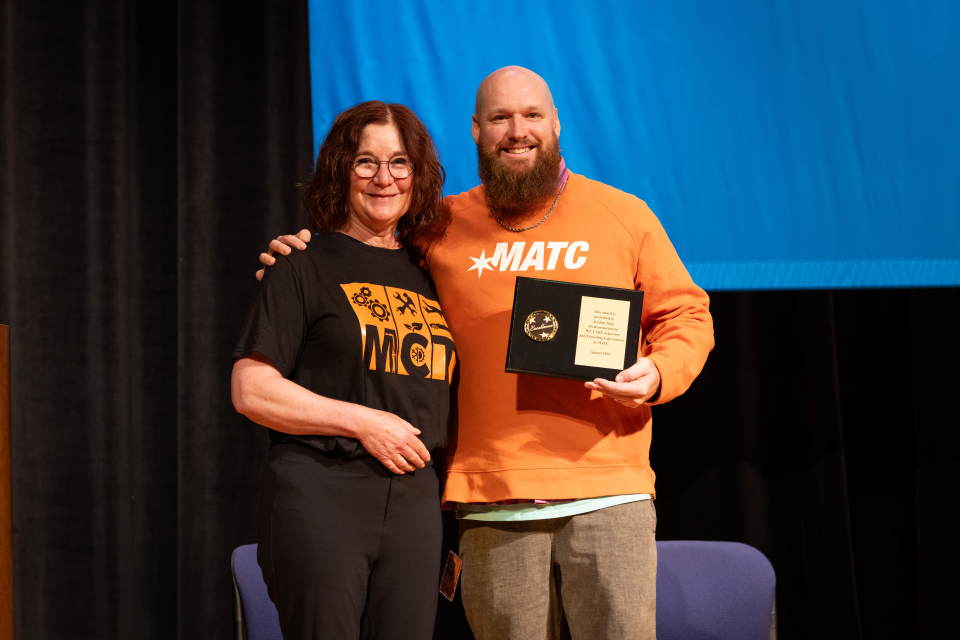
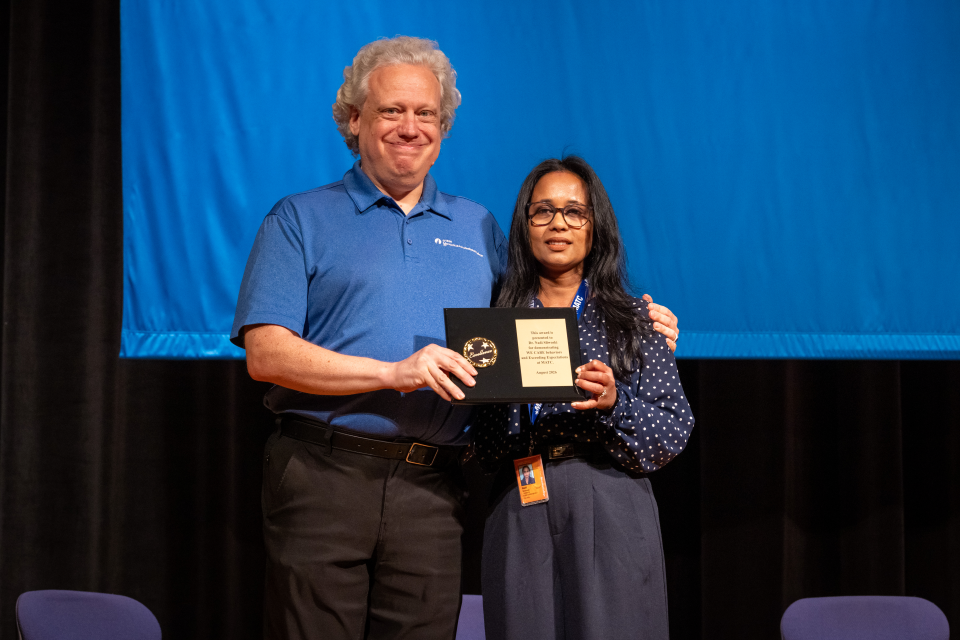
Such simple sharing can make all the difference for students, said Dr. Nadi Sliwoski, a chemical and microbiology instructor. She was honored on Thursday for winning the college’s WE CARE award for service excellence during the fourth quarter of the 2025-26 school year.
“I urge my colleagues to notice and respond to these things because they matter,” Dr. Sliwoski said.
Jordan Jung, a student success liaison for the Manufacturing, Construction and Transportation Academic and Career Pathway, was also honored for winning the third quarter 2025-26 WE CARE award.
In all, more than 250 employees received WE CARE award nominations during the third and fourth quarters of 2025-26, said Dr. Michael Jenkins, dean of the STEM pathway.
“That’s a lot of exceptional work by a lot of exceptional people,” he said.
Read about 2025-26 Academic Year Kickoff
About MATC: Wisconsin’s largest technical college and one of the most diverse two-year institutions in the Midwest, Milwaukee Area Technical College is a key driver of southeastern Wisconsin’s economy and has provided innovative education in the region since 1912. More than 35,000 students per year attend the college’s four campuses and community-based sites or learn online. MATC offers affordable and accessible education and training opportunities that empower and transform lives in the community. The college offers more than 180 academic programs — many that prepare students for jobs immediately upon completion and others that provide transfer options leading to bachelor’s degrees with more than 45 four-year colleges and universities. Overwhelmingly, MATC graduates build careers and businesses in southeastern Wisconsin. The college is accredited by the Higher Learning Commission.