

Arab American Heritage Month is an opportunity for meaningful education and community engagement. We are so beautifully diverse and we are excited to share our rich culture.

In high school, Sawsan Rizeq couldn’t wait to learn about the world.
She was excited when her ninth grade class started a World Cultures course, and even more enthusiastic that the final section would be about the Middle East and the Arab world: she could share her culture and introduce her classmates to new words, food and traditions.
But Rizeq, now the supervisor of advising and retention at Milwaukee Area Technical College, was disappointed and saddened.
“My classmates did not learn anything about Arab culture, the people or the contribution of Arabs in general,” Rizeg recalled. “The most they got was the names of capitals and some very hurtful stereotypes.”
Since then, Rizeq’s resolve to share her heritage has become even stronger.
This month, she played a key role in MATC recognizing and celebrating the rich tapestry of Arab history, culture and societal contributions at several events during National Arab American Heritage Month.
“Arab American Heritage Month is an opportunity for meaningful education and community engagement,” Rizeq said. “We are so beautifully diverse and we are excited to share our rich culture.”
National Arab American Heritage Month began in 2017 to celebrate the culture, history, and contributions of the nearly 3.7 million Arab Americans in the United States. The theme of the 2026 celebration is “Many Voices, One Community.”
“This month offers an important chance to educate students, faculty, staff and community members who might be unfamiliar with Arab heritage,” Rizeq said. “The planned events also ensure that our Arab American students and staff feel seen, valued and represented.”
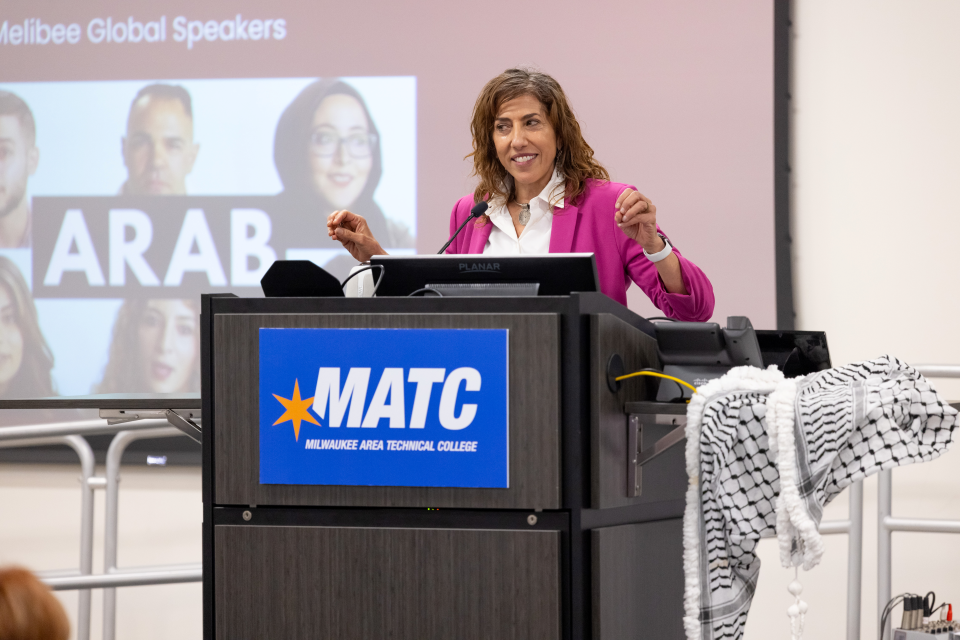
On Wednesday, April 15, at MATC’s Downtown Milwaukee Campus, author and scholar Dr. Nadine Naber from the University of Illinois-Chicago (UIC) delivered the keynote address about Arab stereotypes.
At UIC, Dr. Naber founded the Arab American Cultural Center and co-founded the university’s Global Middle East Studies program. At the University of Michigan, she co-founded the Arab and Muslim American Studies programs.
Dr. Naber spoke on many issues, including geographies, feminism in the Middle East, racism and Arab Americans, women of color-led activist movements, motherhood and higher education. She has also written five books.
The event featured a display of art by Amal Azzam, a Muslim American artist based in Milwaukee. Amal co-founded Fanana Banana, an inclusive art space specifically tailored for Muslim, Middle Eastern and North African, marginalized and underserved artists.
A lunch of traditional halal food, including pita chips and hummus, baba ghanoush, tabbouleh, labneh, stuffed grape leaves, vegetarian moussaka, halal chicken skewers, baklava and rice pudding, was served following the presentation.
A myriad of events were organized by the college’s Office of Community Impact and Office of Student Life including:
- MATC Arabic language instructor Omar Da San and psychology instructor Asma Masri discussed the Arabic language at a virtual session.
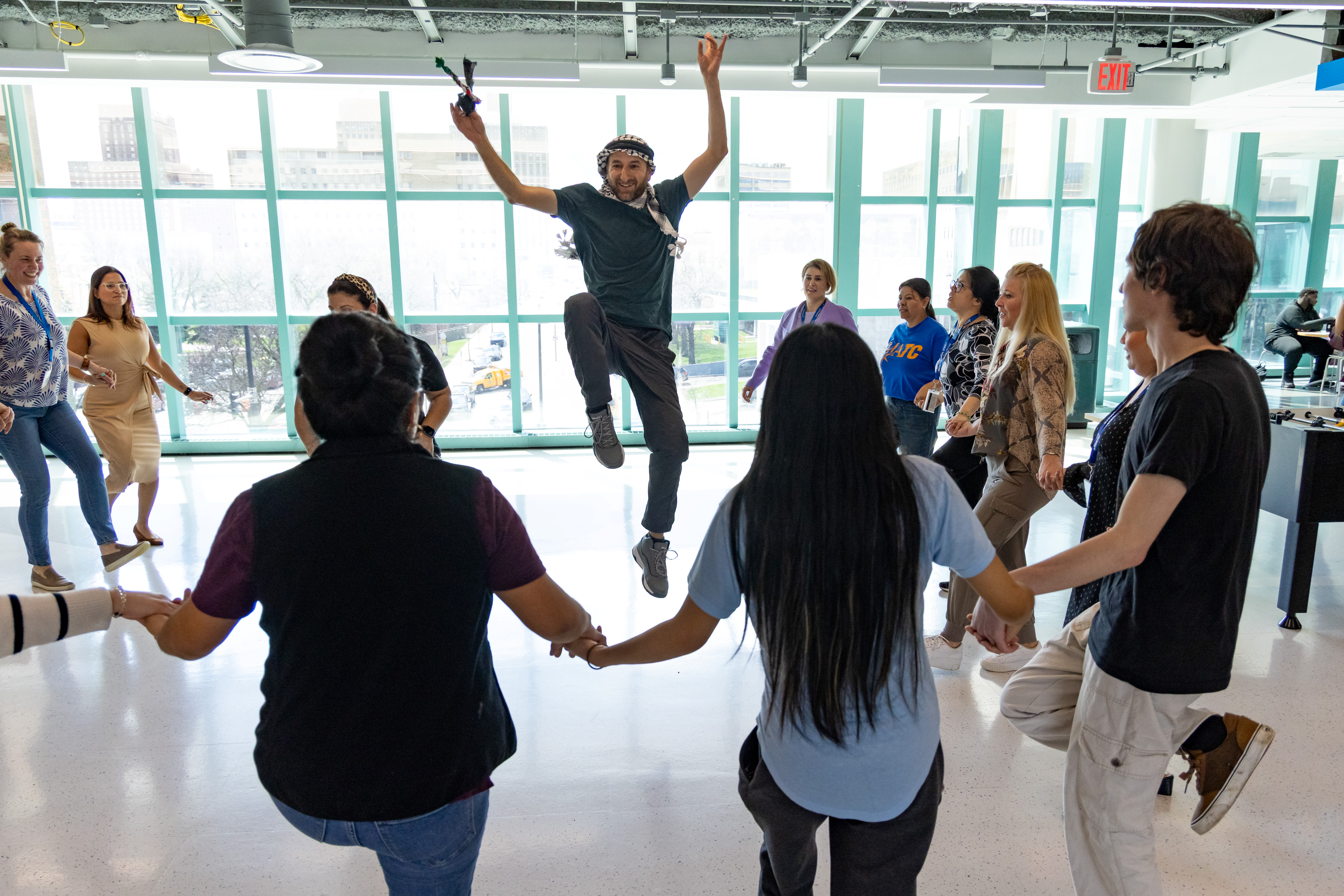
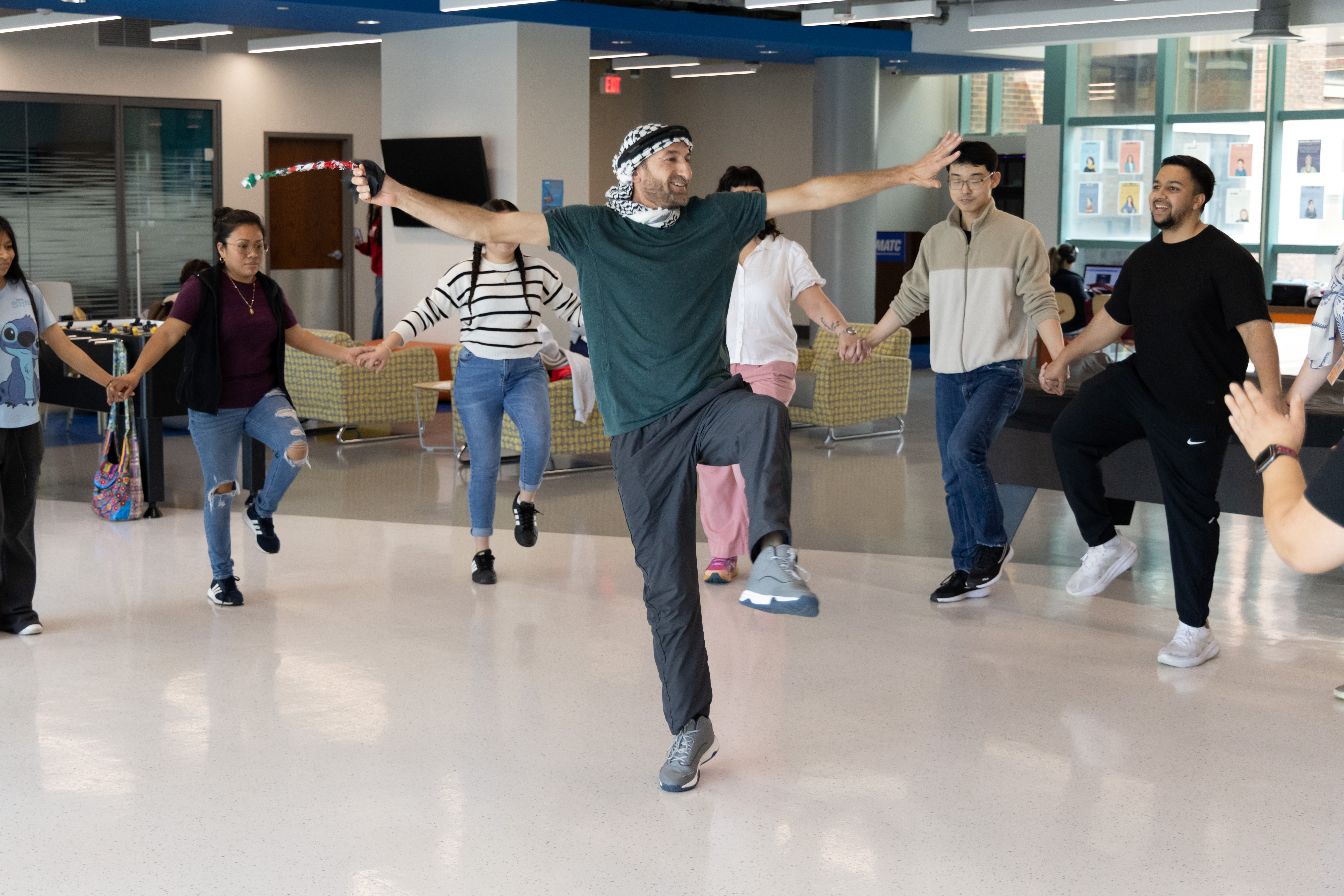
- Several Dabkah dancing demonstrations. Dabkah is a traditional Levantine line dance characterized by synchronized stomping, hopping, and holding hands or shoulders. Originating from Lebanon, Palestine, Jordan, Syria, and Iraq, it symbolizes community and resilience. It is performed at weddings, festivals, and celebrations.
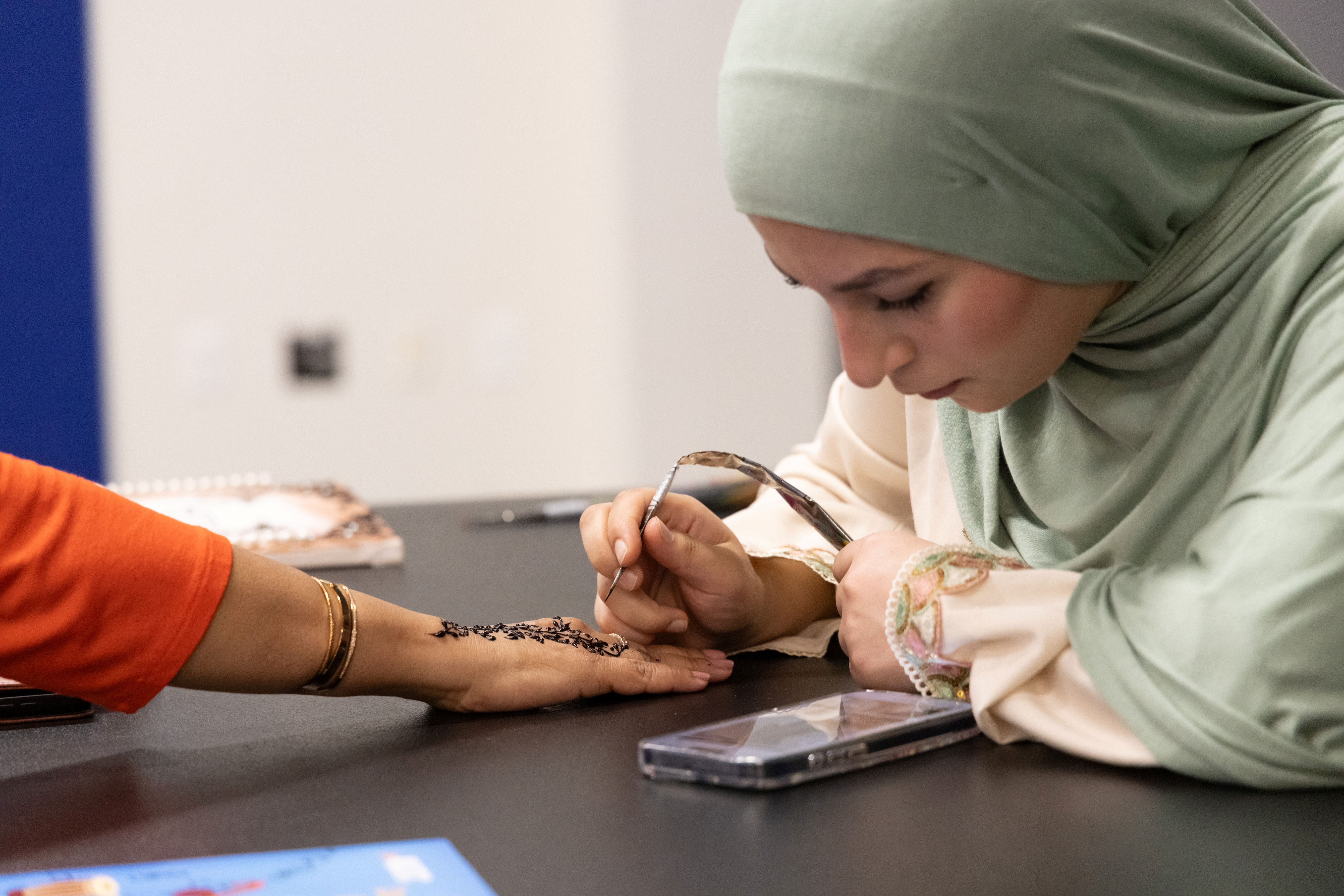
- Henna skin paintings and Yemeni Chai tastings. Henna is a plant-based dye used for more than 5,000 years to create temporary tattoos on the skin, hair, and nails. In Muslim cultures, it symbolizes blessings, good luck, and prosperity. Yemeni Tea is an aromatic beverage that blends black tea with various herbs and spices.
Hundreds of students, staff and visitors attended the various events across MATC campuses.
Read coverage of MATC's events
About MATC: As Wisconsin’s largest technical college and one of the most diverse two-year institutions in the Midwest, Milwaukee Area Technical College is a key driver of southeastern Wisconsin’s economy and has provided innovative education in the region since 1912. More than 35,000 students per year attend the college’s four campuses and community-based sites or learn online. MATC offers affordable and accessible education and training opportunities that empower and transform lives in the community. The college offers more than 180 academic programs — many that prepare students for jobs immediately upon completion and others that provide transfer options leading to bachelor’s degrees with more than 45 four-year colleges and universities. Overwhelmingly, MATC graduates build careers and businesses in southeastern Wisconsin. The college is accredited by the Higher Learning Commission.