

The future belongs to those who will build talent, not wait for it. The future belongs to those who build it, but the future works only if we all build it together.

Employers who hesitate to help train the workforce of tomorrow will be lost.
That was the simple yet strong message heard by nearly 500 regional employers, community leaders, educational administrators and elected officials on Thursday, February 26, at the Future Workforce Summit.
The event, sponsored by BizTimes Media, spotlighted how collaborations between businesses and educators, along with investments in literacy, technology skills and school-to-work transitions, can strengthen both students and the regional workforce.
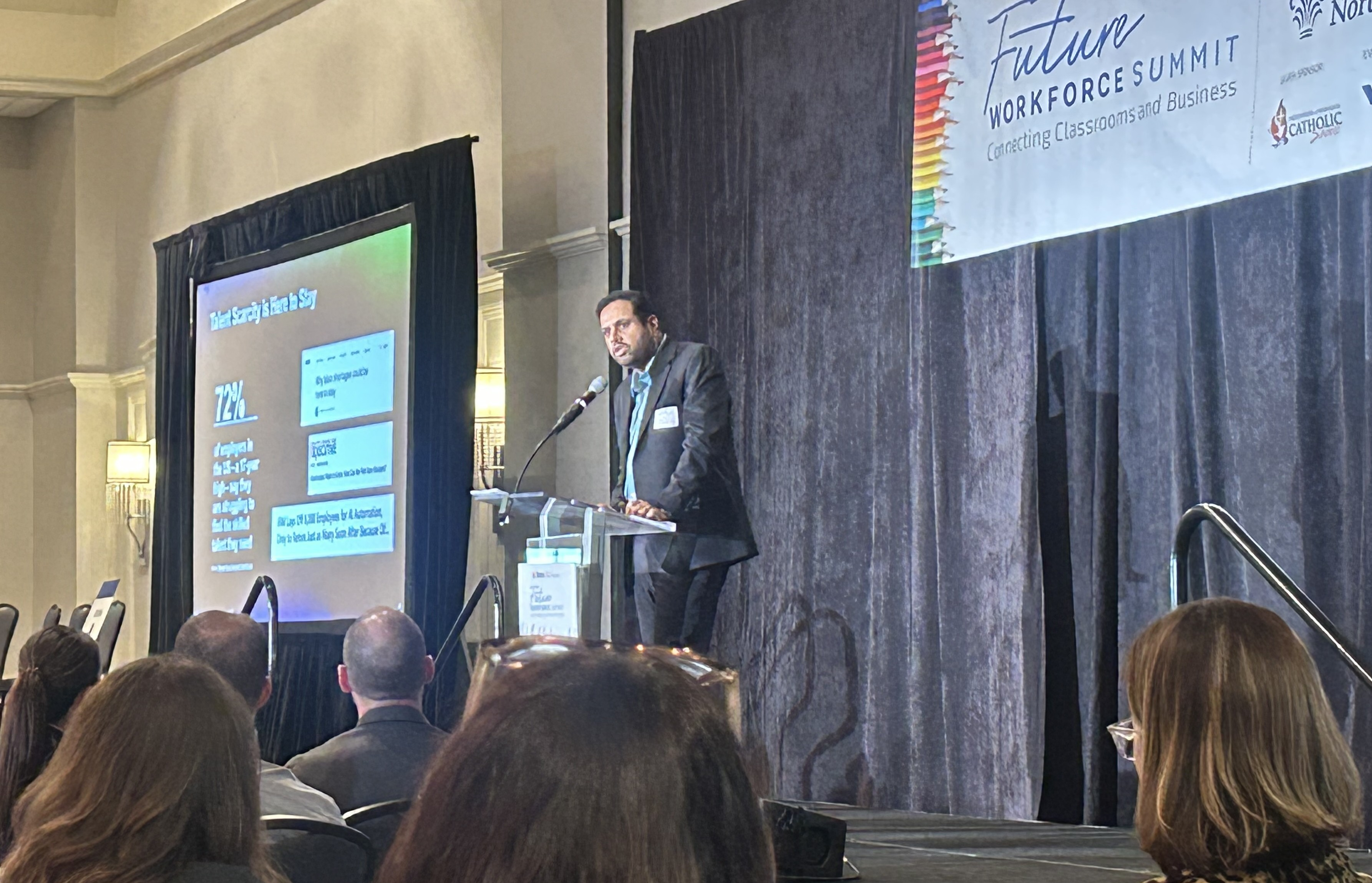
Rajesh Namboothiry, senior vice president and head of Manpower North America and a member of the Milwaukee Area Technical College Foundation Board of Directors, delivered the event’s keynote speech at the Italian Community Center in the city’s historic Third Ward.
 “The future belongs to those who will build talent, not wait for it,” Namboothiry said. “The future belongs to those who build it, but the future works only if we all build it together.”
Namboothiry said employers and educators must work together to build the workforce of the future because talent scarcity is at a 17-year high: 72% of companies say they can’t find the talent they need.
“Employers say they can’t find the talent they are looking for. Prospective workers are asking where the jobs are? Educators say they are graduating students in record numbers,” he said.
The good news: “This doesn’t have to be our destiny,” he said. “It’s a design problem that we can fix.”
Here’s how, he said:
Employers must continuously upskill their workers — only 27% of companies actively teach employees new skills — aggressively emphasize retention, and expand partnerships with educational institutions, Namboothiry said.
Workers also must constantly expand their education, he said. “A college degree is not the finish; it’s the start,” Namboothiry said. Workers also must become fluent in artificial intelligence and learn skills they can take with them and use anywhere, he added.
Educators must modernize their curricula, expand work-integrated learning opportunities, encourage short-term credentials and emphasize soft skills, he said.
Higher education institutions like MATC are critical to the Milwaukee workforce pipeline, Namboothiry said. The college has more than 35,000 students and 96% of graduates stay and work in Wisconsin, he said.
After Namboothiry’s keynote speech, breakout sessions were held on topics such as creating and sustaining talent pipelines, developing careers in professional services, fostering career interest in healthcare, and serving effectively on a board. Employers, hiring managers and educators shared lessons learned in school-to-work, dual enrollment, apprenticeships and other initiatives.
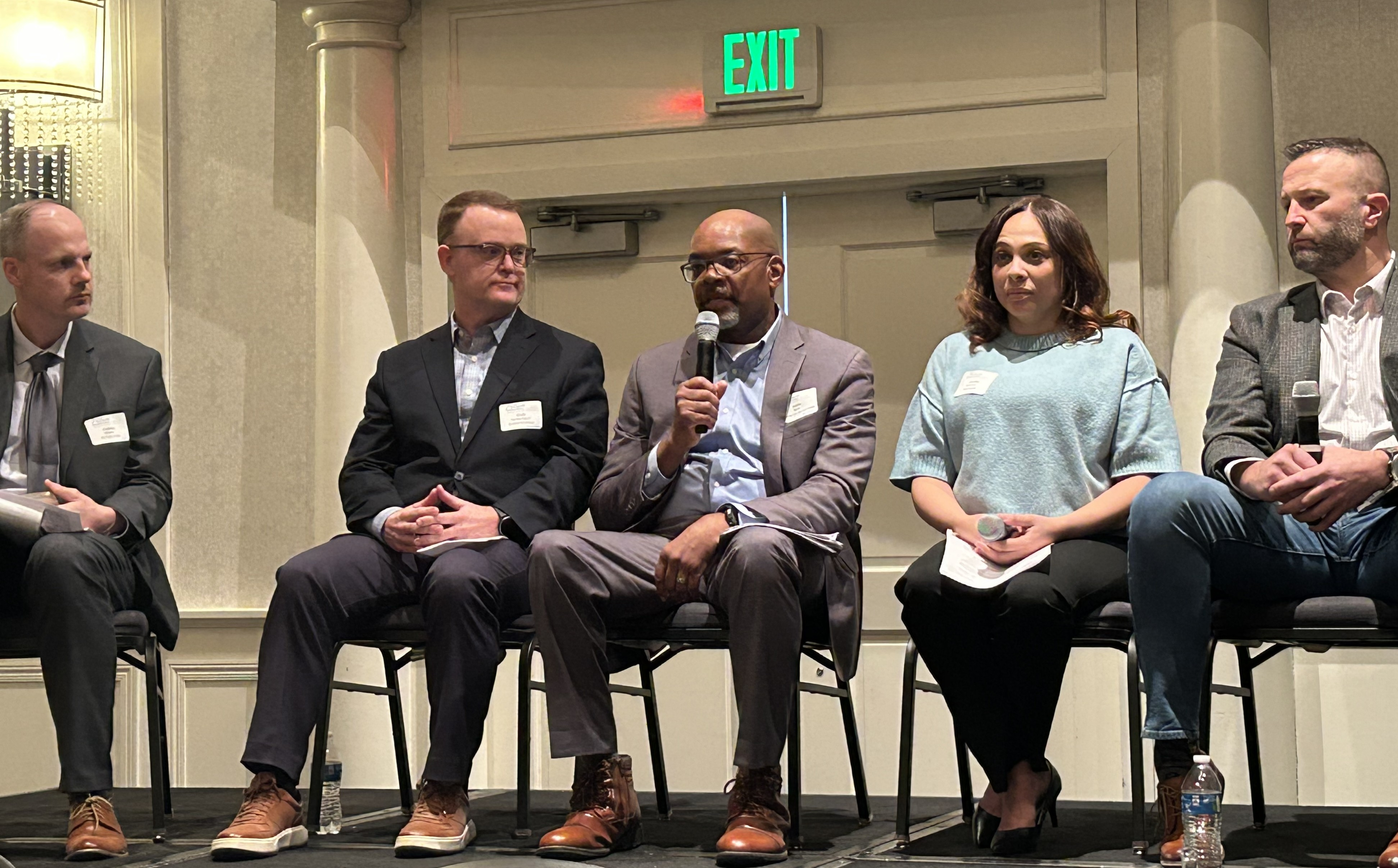
Eddie Nash, a retired MATC Electrical Power Distribution instructor, participated on a panel discussing how to attract and retain skilled workers in order to build and maintain infrastructure. He shared lessons learned from companies partnering with MATC and community organizations to create hands-on career pathways.
“When you collaborate with someone like We Energies, you have access,” Nash said. “You can find out what they need, and we can tailor our training to match what they need.”
For instance, Nash said We Energies and MATC are developing a program where students in the Electrical Power Distribution program could simultaneously earn a commercial driver’s license so they could operate heavy equipment.
Dr. Phillip King, MATC’s executive vice president and provost, was part of a panel discussing how advisory councils could best connect classrooms to careers.
MATC has 88 advisory committees with a total of 811 members. The committees meet twice a year to discuss curriculum, clarify career pathways and help expand work-based learning.
About MATC: Wisconsin’s largest technical college and one of the most diverse two-year institutions in the Midwest, Milwaukee Area Technical College is a key driver of southeastern Wisconsin’s economy and has provided innovative education in the region since 1912. More than 35,000 students per year attend the college’s four campuses and community-based sites or learn online. MATC offers affordable and accessible education and training opportunities that empower and transform lives in the community. The college offers more than 180 academic programs — many that prepare students for jobs immediately upon completion and others that provide transfer options leading to bachelor’s degrees with more than 45 four-year colleges and universities. Overwhelmingly, MATC graduates build careers and businesses in southeastern Wisconsin. The college is accredited by the Higher Learning Commission.