

This office is based on the simple yet powerful idea that students succeed when they are welcomed and supported. No student should have to navigate their journey alone.

Amy Varela started at Milwaukee Area Technical College flummoxed and flustered.
She wandered through the Downtown Milwaukee Campus, struggling to find where to go for her very first class.
“I got lost,” said Varela, who grew up in Costa Rica. “I was asking anyone I could find where I needed to go. People were very helpful. I got to that class on time.”
This spring, Varela started her fifth semester at MATC and will earn an Associate of Science degree in May. She also is working in the college’s Office of Community Impact as a peer mentor: Now she’s the one answering student questions.
“I want to help students get off to a good start,” said Varela, who plans to study biomedical engineering at the Milwaukee School of Engineering in the fall. “Helping them get their ID and get their parking permit helps them save time, gain confidence, feel prepared and focus on what really matters, which is getting an education.”
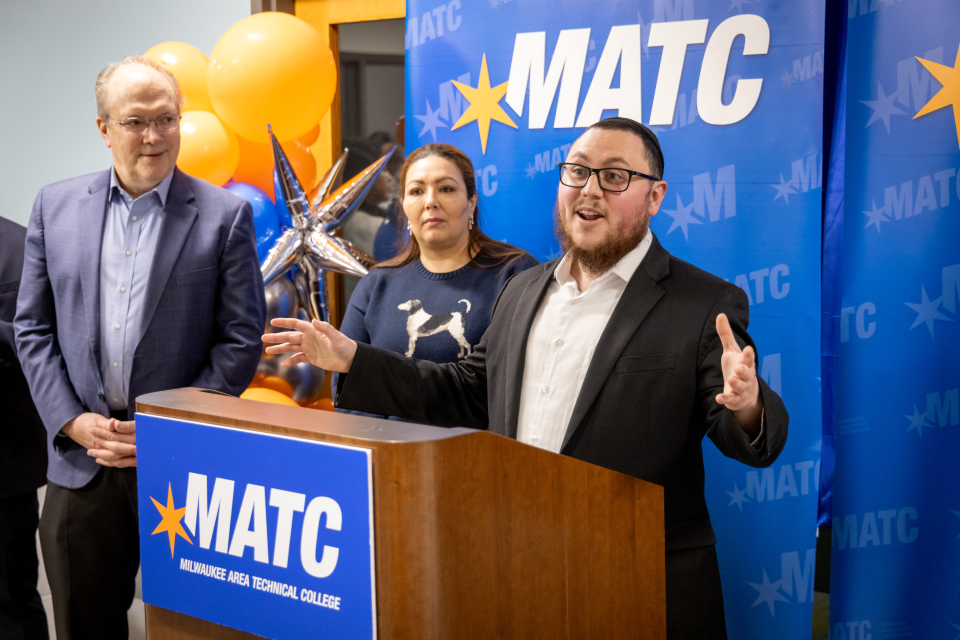
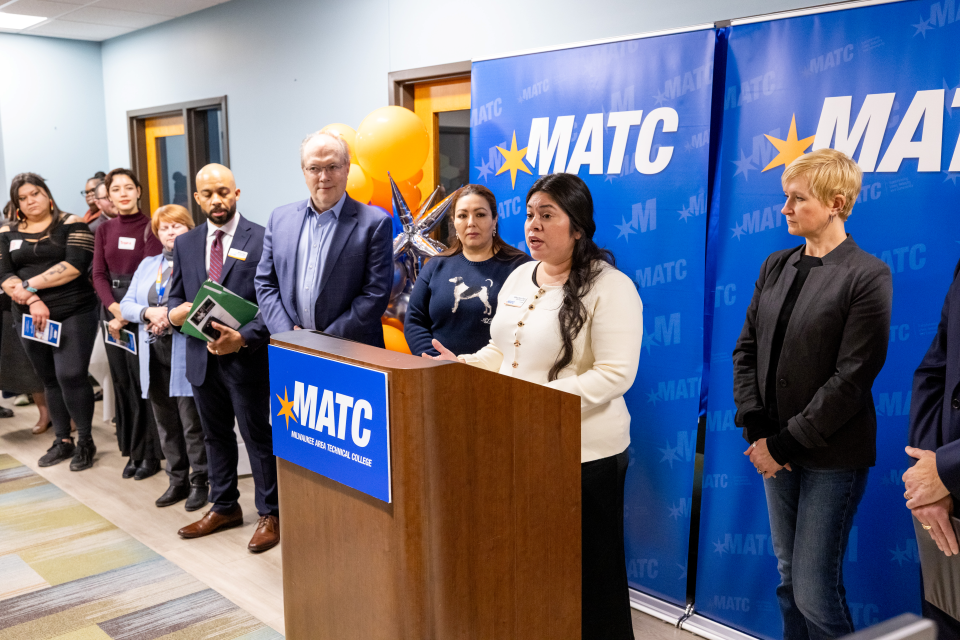
Varela was one of several dozen MATC staff members, faculty and students who gathered Tuesday, January 27, to showcase the Office of Community Impact, located on the second floor of the Main Building at the Downtown Milwaukee Campus.
The goal of the office is to strengthen student success by connecting students to resources, relationships and opportunities that make them feel welcome and help them stay in school and graduate with a certificate, diploma or degree.
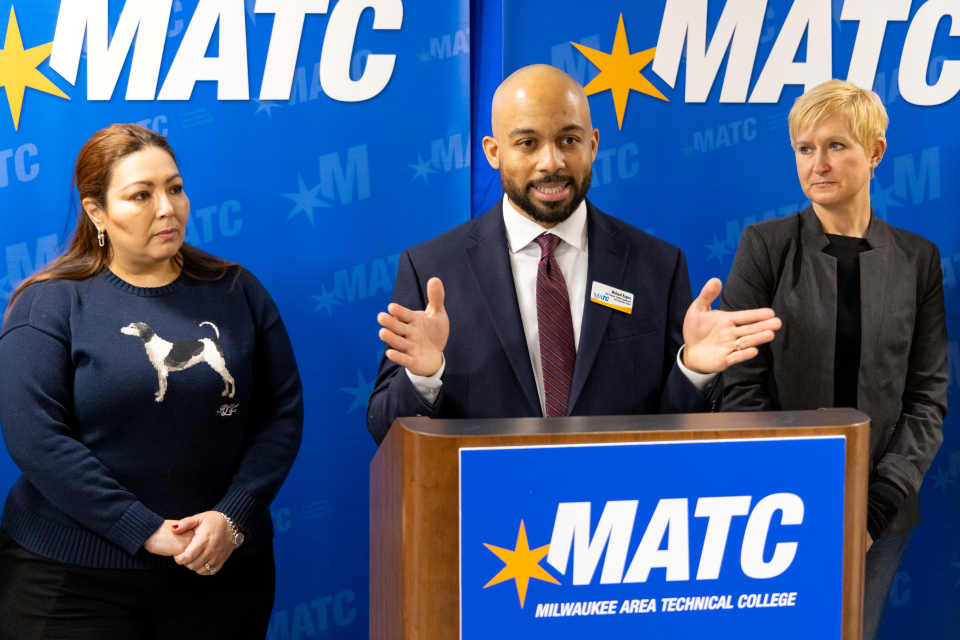
“This office is based on the simple yet powerful idea that students succeed when they are welcomed and supported,” said Michael Rogers, MATC’s vice president of student engagement and community impact, at Tuesday’s event. “No student should have to navigate their journey alone.”
Read about the event
Milwaukee Neighborhood News Service
The office offers comprehensive support through peer mentoring and leadership development, intercultural and campus programming, and strategic community partnerships, Rogers said.
The office serves all MATC students, with a particular focus on those who may benefit from additional academic, financial or community-based support.
“Our students come to MATC with different experiences — working parents, first-generation college students, career changers and veterans — with the shared drive and aspiration to build something better for themselves and their families,” MATC President Dr. Anthony Cruz said. “The Office of Community Impact supports their journey by recognizing these differences, removing barriers that may result from these differences and designing pathways to reach their education and career goals.”
The office has five employees who can connect students with an array of programs and services to help them succeed, said Rebecca Arcos-Piedra, manager of the office.
“We are here to serve all students from the time they first walk through our doors until they graduate,” she said. “Many times, students don’t know what they don’t know.”
Varela said she was one of those students. She is the first person in her family to attend college and had no idea what to expect. “I had to gain all my knowledge by going to college,” she said.
While the office has been operating since August 2025, Tuesday’s occasion marked the official opening of the space and the significant progress and expansion of services for students as they start the Spring 2026 semester.
The office has launched a mentoring program in partnership with MENTOR Greater Milwaukee. Varela and Soukaina Haddad, who is in the IT Web and Software Developer program, received training as mentors and now talk to students once a week or twice a week.
“When I first started at MATC, I was lost,” Haddad recalled. “I made a lot of mistakes and was wasting a lot of energy running between offices to find the right resource. I wish I had a peer mentor. That would have made a huge difference in my experience as a first-year student.”
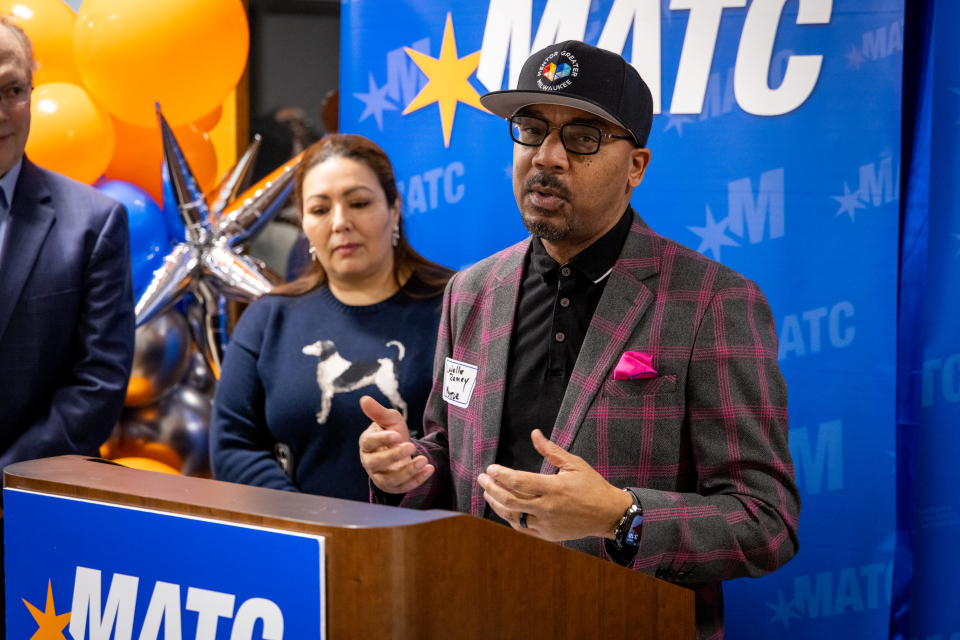
Mentoring helps students overcome challenges, stay engaged and see what’s possible, said LaNelle Ramey, executive director of MENTOR Greater Milwaukee, who delivered the keynote speech at MATC’s Winter Commencement last December at Fiserv Forum.
“Through this partnership, we’re helping build a mentoring culture that supports students not just academically but as whole people, connecting them with relationships that encourage confidence, growth and long-term success,” Ramey said at Tuesday’s event. “We want to make sure this entire campus has a mentoring mindset.”
The office also has established partnerships with United Community Center, the African American Leadership Alliance of Milwaukee, the Ho-Chunk Nation Milwaukee Branch Office and Chabad on Campus-Milwaukee, which serves Jewish students at five city colleges, including MATC.
Rabbi Lev Voskoboynik, executive director of Chabad on Campus-Milwaukee, spoke at Tuesday’s event. He said he read in an article that the main reason students drop out of college is that they feel like they don’t belong.
“The purpose of this office is to let you know that you are never alone,” Voskoboynik said. “We’re here to help you flip the switch. Sometimes you just need to know where the light switch is. When you find it, you can flip it on and you can light up your whole life.”
Learn more about the Office of Community Impact
About MATC: As Wisconsin’s largest technical college and one of the most diverse two-year institutions in the Midwest, Milwaukee Area Technical College is a key driver of southeastern Wisconsin’s economy and has provided innovative education in the region since 1912. More than 30,000 students per year attend the college’s four campuses and community-based sites or learn online. MATC offers affordable and accessible education and training opportunities that empower and transform lives in the community. The college offers more than 180 academic programs — many that prepare students for jobs immediately upon completion and others that provide transfer options leading to bachelor’s degrees with more than 40 four-year colleges and universities. Overwhelmingly, MATC graduates build careers and businesses in southeastern Wisconsin. The college is accredited by the Higher Learning Commission.