


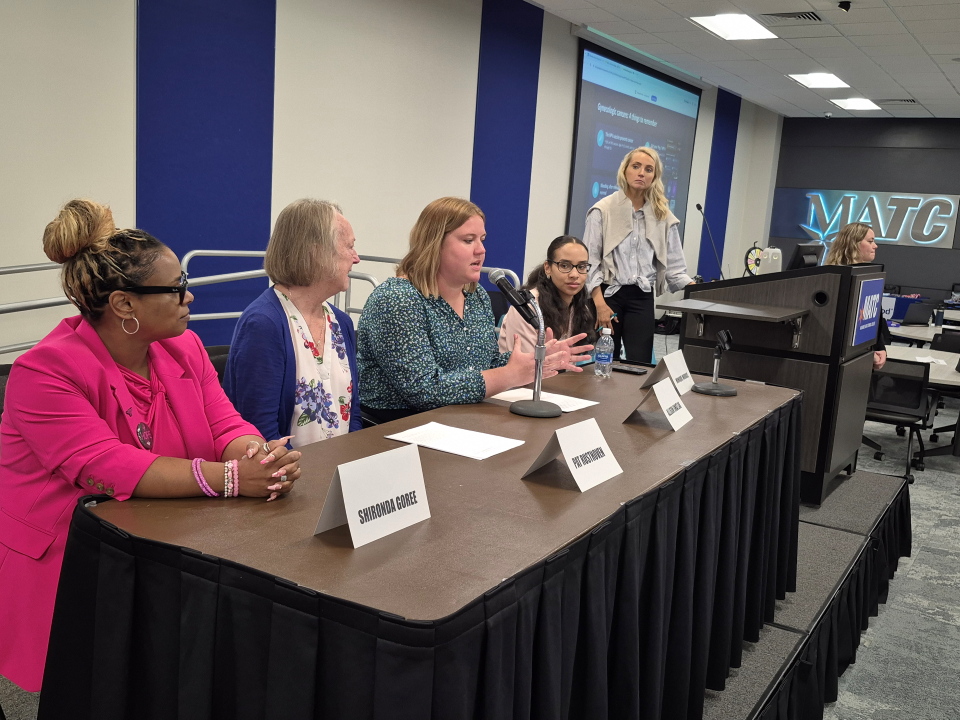
There is a whole community of pink sisters out here who want to make sure all women have what they need.

Monique Morris must have read the medical test results about a million times.
“It said, ‘highly suspicious for malignancy,’” Morris said. “I kept looking at it. Finally, my heart just sank.”
At 31 years old, she had Stage 2 breast cancer, which had spread to her lymph nodes. After numerous surgeries, including a mastectomy, and 25 radiation treatments, the cancer that started as a lump in her right breast was gone.
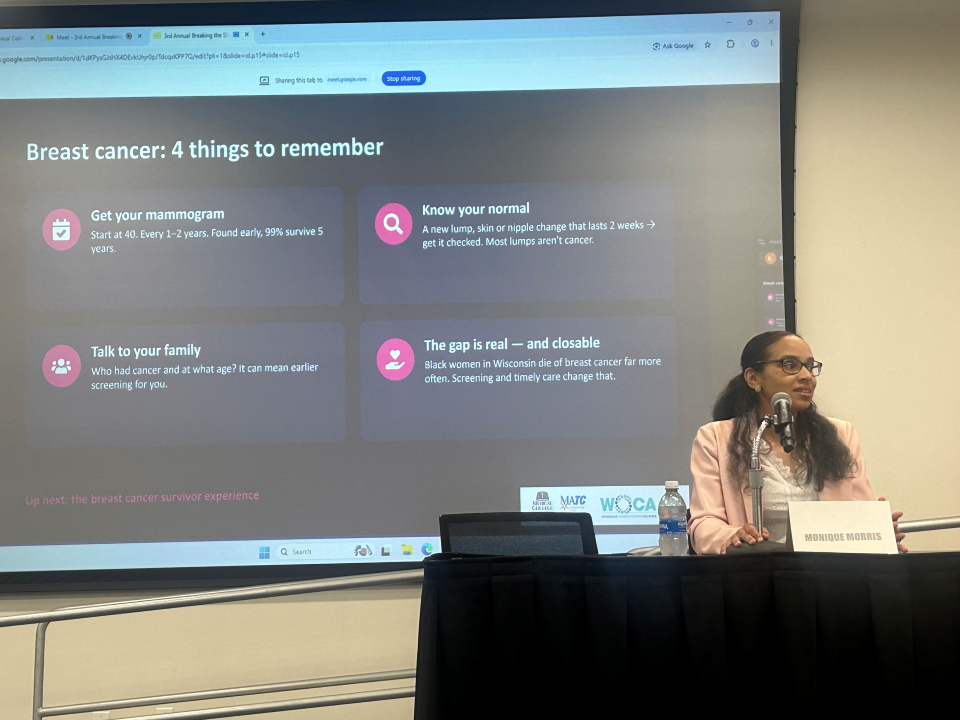
Her four-year battle with cancer spurred Morris to help women enduring the same painful journey. She became an active volunteer for several cancer support groups and on Wednesday, October 14, was one of four cancer survivors to share her experiences at Breaking the Silence, a panel discussion and resource fair held at Milwaukee Area Technical College.
“I knew that I wanted to and that I needed to help,” Morris said.
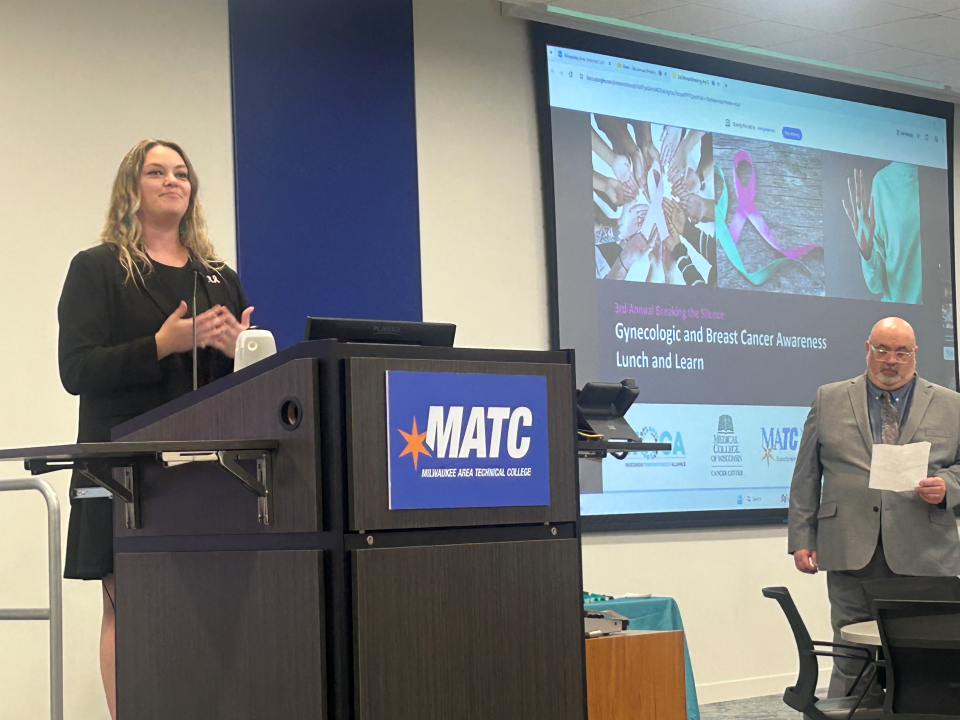
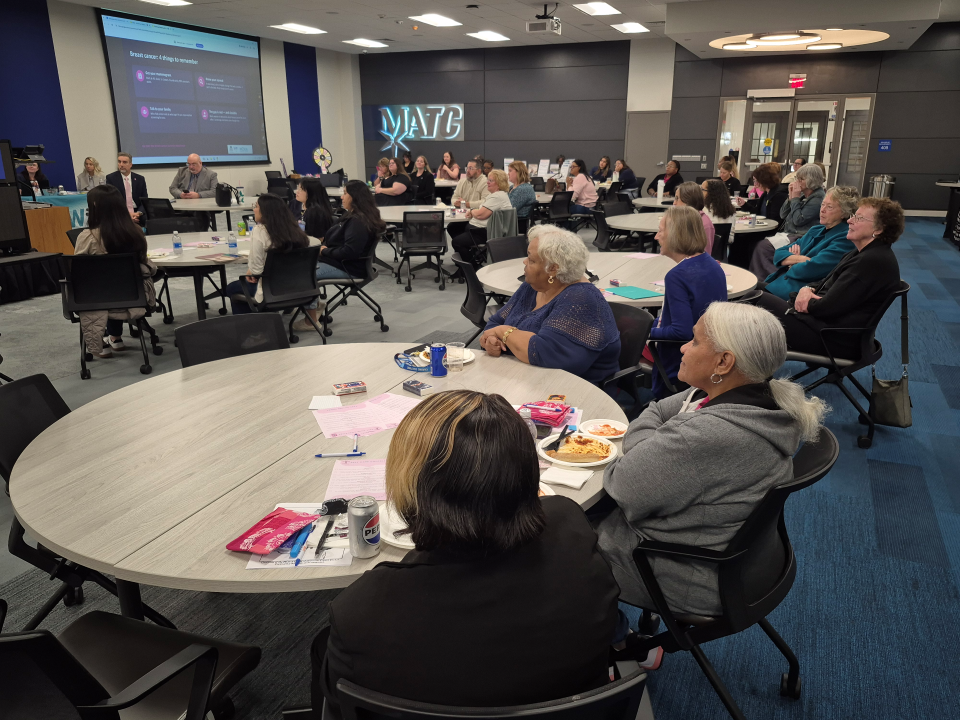
Nearly 100 community members, MATC students, faculty and staff attended the third annual event, presented during national Breast Cancer Awareness Month by the college, the Medical College of Wisconsin, the Wisconsin Ovarian Cancer Alliance and the Community and Cancer Science Network.
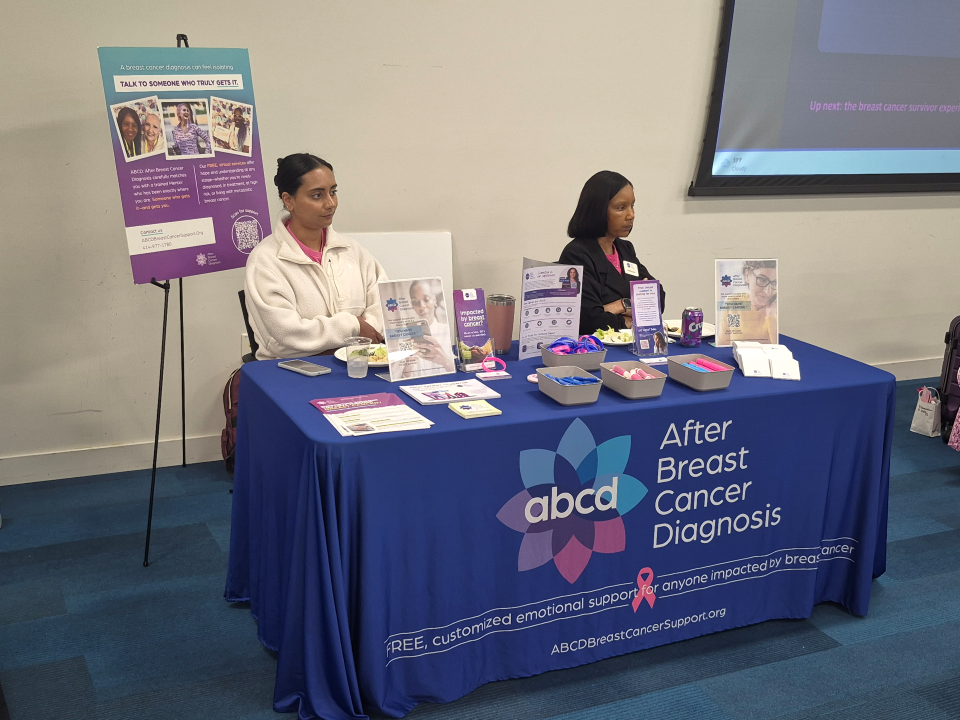
Participants learned about breast cancer and gynecological cancers, received information from several cancer support groups and heard emotional stories from cancer survivors
“Gynecological and breast cancer carry unique physical and emotional burdens. And unfortunately, sometimes they even carry a stigma that makes people afraid to speak up,” MATC President Anthony Cruz said at the event. “By sharing your stories today, you are literally breaking the silence. You are stripping away the fear of the unknown for others, and for that, we celebrate you. We honor you and we thank you.”
Dr. James Fan Wu, a hematology and oncology fellow at the Medical College of Wisconsin, shared data on breast cancer and gynecological cancers in the United States and Wisconsin. Dr. Wu said there is expected to be 321,910 cases of breast cancer detected in the United States in 2026, with 42,140 deaths.
Other information that Dr. Wu shared included: uterine cancer is the most common type of gynecological cancer and ovarian cancer is the deadliest; incidence rates of gynecological cancer are higher among Black females; and when breast cancer is detected early and is in a localized stage, the five-year survival rate is 99%.
“There are many things we cannot change with our bodies, but there are things we can change about our behaviors,” Dr. Wu said. “Getting mammograms starting at 40 years old in one way of ensuring early detection.”
President Cruz said his mother was diagnosed with breast cancer 10 years ago. Thanks to early detection and successful treatment, she is a cancer survivor today. “She is a vibrant, 82-year-old, living her best life in Miami, Florida,” President Cruz added.
Shironda Goree, another cancer survivor on the panel, said she started getting mammograms when she was 23 years old because her mother died of cancer.
“My mom died eight months after her diagnosis,” Goree said. “I wanted to make sure I was around for my daughter. I fought for my child because the heartbreak I felt losing my mom was just too great.”
In 2021, Goree’s mammogram revealed she had Stage 2 breast cancer. “The first thing I thought was I’m going to die, because my mom didn’t make it,” she said. “Cancer turned everything in my life upside down.”
She underwent a double mastectomy, 13 additional surgeries and rehab. She started to volunteer for cancer support groups and travels to Washington, D.C., to advocate for cancer patient rights.
“There is a whole community of pink sisters out here who want to make sure all women have what they need,” Goree said.
Illinois resident Patricia Rusthoven, another panelist, found what she needed to help her battle Stage 4 ovarian cancer in a registered nurse named Ashley.
“She asked me if I wanted to live,” recalled Rusthoven, who was diagnosed in 2021. “When I told her I did, she told me, ‘Let’s get started.’”
At 71, Rusthoven underwent chemotherapy, surgery and more chemotherapy. She lost all of her hair, her sense of taste and more than 30 pounds. Ashley was at her side every step of the way, she said, and she thanked the healthcare students at the event for dedicating their careers to helping others.
“Fighting cancer is a group effort. You can’t do it alone,” Rusthoven said. “Thank you for being willing to be the light in someone’s darkest day.”
Read about 2025’s Breaking the Silence event
About MATC: Wisconsin’s largest technical college and one of the most diverse two-year institutions in the Midwest, Milwaukee Area Technical College is a key driver of southeastern Wisconsin’s economy and has provided innovative education in the region since 1912. More than 35,000 students per year attend the college’s four campuses and community-based sites or learn online. MATC offers affordable and accessible education and training opportunities that empower and transform lives in the community. The college offers more than 180 academic programs — many that prepare students for jobs immediately upon completion and others that provide transfer options leading to bachelor’s degrees with more than 45 four-year colleges and universities. Overwhelmingly, MATC graduates build careers and businesses in southeastern Wisconsin. The college is accredited by the Higher Learning Commission.