



What I learned at MATC has served me for my whole life ... MATC and the professors there really set me up for the future.

Behold the human eye.
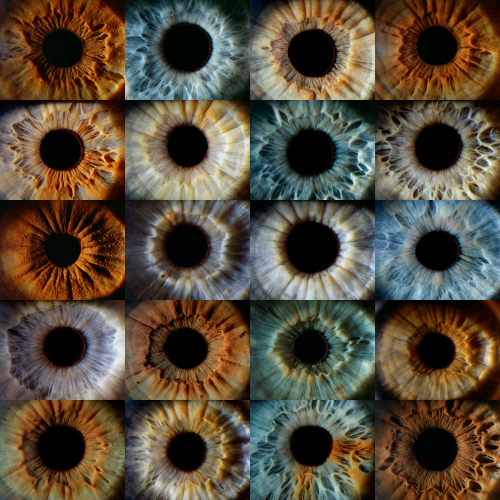
Nestled in a bony cavity within the skull, this astonishingly compact yet complex ocular marvel consists of more than two million working parts that capture light, focus images, feed information to the brain and allow us to enjoy 10 million colors.
For MATC alumnus Mark Maio, the eye is where science and art intersect. He’s a biomedical photographer and a pioneer in high-resolution ophthalmic digital imaging, as well as a fine art photographer whose work has been exhibited in museums and galleries and enshrined in the prestigious George Eastman House in New York.
His fascination with images began in the Milwaukee suburbs, was nurtured in Milwaukee Area Technical College’s well-regarded Photography program, and has flourished around the world for the past 50 years.
“Most photographers find their relationship with the medium and rarely stray outside those confines,” wrote Brooks Jensen, editor of LensWork Publishing, in the foreword of a book by Maio. “Except, that is, for a creative individual like Mark Maio.”
Growing up in St. Francis
Maio was born and raised in St. Francis, although his large, extended family grew up near Brady Street. All four of his grandparents immigrated from the same city — Milazzo in Sicily. One grandfather was a marble mason who helped build the original Northwestern Mutual Insurance building on Wisconsin Avenue. His mother was one of eight children. His father served in World War II and worked for Wisconsin Electric Power for 42 years. Maio had 37 first cousins whom he saw almost every weekend.
Maio attended Catholic grade school. One year, the school sponsored a candy-selling contest. First prize was a bicycle that Maio craved. He finished second — one box short of the top spot — and won a camera.
He snapped photos of his family and of the neighborhood. At St. Francis High School, he took printing classes. As a reward for finishing its work early, the class got to learn how to process film. Maio’s creative juices bubbled to the surface when he witnessed a photographic print come to life in a development tank.
“That was magical to me,” Maio remembered. “I went into the darkroom at 8:30 a.m. and the next thing I knew it was 4:30 p.m. I was addicted.”
He graduated from high school in 1973. Maio enrolled at MATC to become a commercial printer. He lived at home and worked second shift at Appleton Electric to pay tuition. He took photography classes along with his printing courses. He quickly discovered that he didn’t really like his printing classes and couldn’t wait to get to his photography classes.
“I changed my degree,” he said. “I wanted to be a photographer.”
Originally, Maio wanted to work for Life magazine, creating elaborate, long-term projects in the tradition of famous photographers Margaret Bourke-White and Eugene Smith. But the longtime periodical went out of business while he was at MATC.
Elliott F. Schnackenberg, who taught photography at MATC for three decades, was Maio’s inspiration and mentor. “Elliott was my favorite,” Maio said. “I loved having him. The instructors had all worked in the field for many years. They weren’t teaching art; they were teaching us how to be photographic problem solvers.”
Maio earned his associate degree in 1975.
“What I learned at MATC has served me for my whole life,” said Maio, who lives in Alpharetta, Georgia. “I was taught technical skills that at the time I couldn’t understand how I would use professionally, but over the years I have continued to draw on as we moved into the digital age and AI. MATC and the professors there really set me up for the future.”
As part of his general education requirements, Maio took a course on how to write a research paper. He chose to write about medical photography, a topic he knew nothing about.
He was enthralled with what he learned. After graduating from MATC, he took a job as a medical photographer at St. Joseph Hospital in Milwaukee. There he discovered ophthalmic photography, which captures detailed images and scans of the eye's internal and external structures. He took a job at the Eye Institute at the Medical College of Wisconsin.
“I thought, what better way for a photographer to help other people than to use photography to help them with their eyesight,” Maio said.
Learning all about the eye
As he honed his craft at the Eye Institute, Maio became fascinated with what he saw when he photographed retinas, corneas and eyeballs. The colors, the shapes, the designs weren’t just vital medical information, they were art. “I would do what the doctors wanted, then I would experiment,” he said.
In 1980, he left Milwaukee for Atlanta. He took a job as the director of ophthalmic photography at Emory University. He supervised a six-person staff that did diagnostic, research and educational imaging at Emory Clinic, Grady Memorial Hospital and the Atlanta Veterans Administration Hospital.
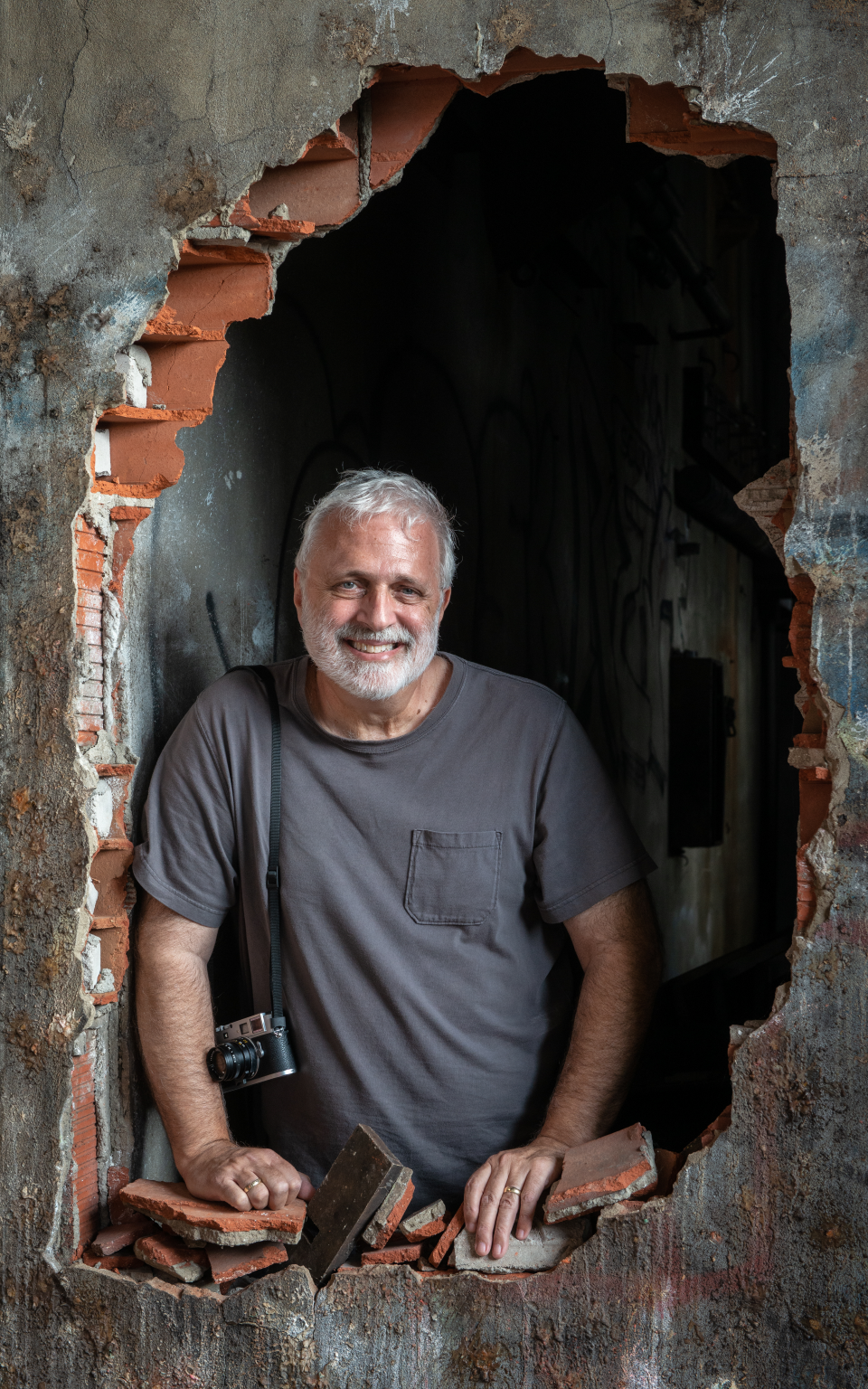
Mark Maio MATC Photography graduate. All photographs © Mark Maio
At the same time, he was perfecting his fine arts photography skills. His medical career was influencing his artistic endeavors and vice versa. He participated in numerous photography workshops, including one with legendary landscape photographer Ansel Adams.
“I really started to understand vision,” Maio said. “I trained my vision to compose photos with my eyes. You train yourself to look for something that’s not there. You need to look at everything in the frame and remove the things that distract or don’t belong.”
In 1988 he went north and became the director of ophthalmic photography at State University of New York (SUNY) in Buffalo. And despite having only his associate degree from MATC, was made a clinical assistant professor of ophthalmology at the college’s medical school.
While working, he earned a bachelor’s degree in biomedical photography from SUNY Empire State College, a master’s degree in American studies and history, and a Master of Fine Arts degree in photography and communication design from the University at Buffalo.
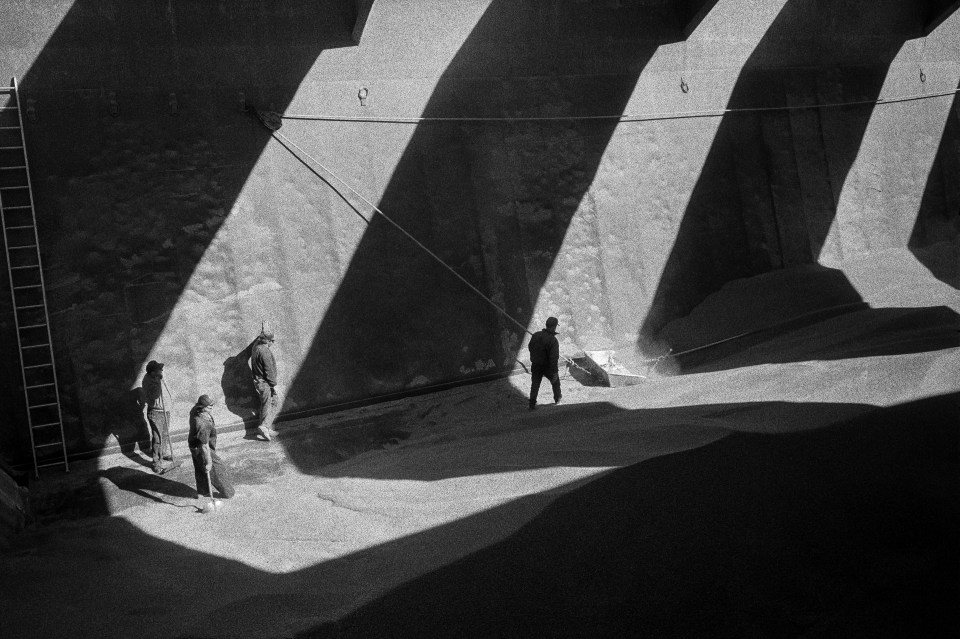
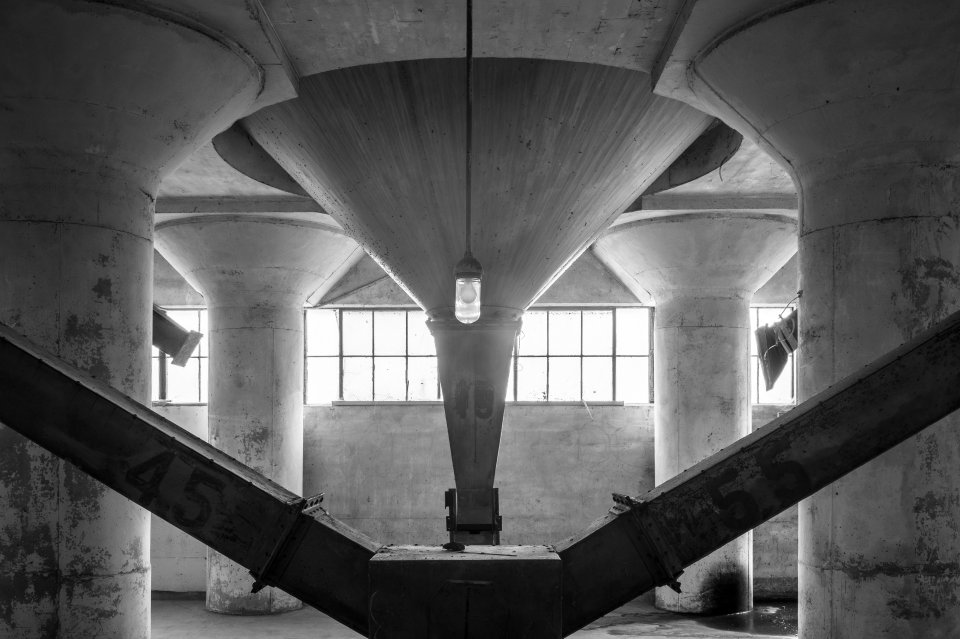
In Buffalo, he also undertook his most ambitious fine arts photography project — a sprawling survey of the last group of immigrants who shoveled grain onto lake freighters at the Lake Erie docks in Buffalo. He spent more than three decades creating the series, called “Against The Grain.”
“I was using my camera to do research about the subject,” Maio recounted. “I felt like I was being chosen to tell that story. With my photos, I’m trying to connect my eyes, my brain and my heart. When all three hit, I know I’m onto something.”
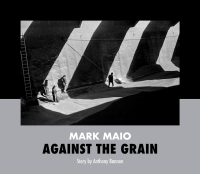 In 2007, the George Eastman Museum purchased 12 prints of the series for its permanent collection. The Eastman, in Rochester, New York, is the world’s largest photography museum and houses one of the oldest film archives in the United States.
The series has been shown at multiple galleries across the country and has been turned into a book by Maio and author Tony Bannon, the former director of the Eastman House.
“Maio doesn’t just show us a glimpse into a community, he shows us the depth and diversity of a way of life,” Brooks Jensen wrote in the book’s foreword. “These are images to linger over. We should allow them to wash over us. There is with each image a depth of experience that should not be missed.”
A pioneer in ophthalmology
Meanwhile, Maio’s scientific side continued to flourish. In 1999, he developed the first high-resolution retinal digital imaging system in ophthalmology. In 2006, Adobe selected Maio for its biomedical imaging advisory group. This group worked with Adobe to develop Photoshop Extended, the first version of the popular software program to contain medical, technical and scientific digital imaging tools.
He also volunteered with ORBIS, an international nonprofit that operates an eye hospital on a plane and treats patients around the world. His work with the group has taken him to Nigeria, Peru, the Philippines and Malaysia. In 2008, Maio and his wife, Catherine, visited Scotland. They fell in love with the country, especially the Isle of Skye.
“A combination of Hawaii and the Grand Tetons,” Maio said. “It has rugged coastlines, constantly changing light and weather, perfect for stargazing and seeing the northern lights. It’s really a photographer’s paradise.”
After several trips there, the couple purchased a former schoolhouse and have been renovating it ever since. They usually travel there twice a year, he said. Maio also offers a photography workshop and retreat there.
Now 71, Maio continues to consult, write, travel and review his extensive catalog of images. “These days it’s about finishing projects I’ve started. It’s not really about making new images, but reviewing what I have done and getting them out there,” he said. “They don’t do any good sitting in my drawer or on my hard drive.”
Still, when a remarkable image flashes into his field of vision, Maio springs into action. On a recent visit to a friend’s home in Lake Geneva, Wisconsin, Maio was drawn to a farm silo, freshly painted white, next to a bright red barn.
He saw it with his eyes and had to snap it with his camera.
“It was striking and I had to make that photograph,” he said with a smile.
Learn more about Mark Maio and his career
About MATC: As Wisconsin’s largest technical college and one of the most diverse two-year institutions in the Midwest, Milwaukee Area Technical College is a key driver of southeastern Wisconsin’s economy and has provided innovative education in the region since 1912. More than 35,000 students per year attend the college’s four campuses and community-based sites or learn online. MATC offers affordable and accessible education and training opportunities that empower and transform lives in the community. The college offers more than 180 academic programs — many that prepare students for jobs immediately upon completion and others that provide transfer options leading to bachelor’s degrees with more than 45 four-year colleges and universities. Overwhelmingly, MATC graduates build careers and businesses in southeastern Wisconsin. The college is accredited by the Higher Learning Commission.