

Seeing that makes you think differently. That experience humbles you.

Darrel Iwanski’s Dominican Republic is far from glamorous.
No luxury resorts serving endless cocktails. No sugar-white sand beaches. No glimmering blue water.
For Iwanski, a Milwaukee Area Technical College welding instructor since 2015, the Caribbean nation is humid and rocky. Roads are unpaved and electrical power unpredictable. The people are incredibly poor.
“The people there really have nothing,” said the soft-spoken Iwanski. “For kids, pushing an old bike wheel down the road is entertainment. If something breaks, they try to fix everything and keep using it. Hammers are duct-taped together. Here, we would just buy a new one.
“Seeing that makes you think differently,” he added. “That experience humbles you.”
Iwanski has had that experience a dozen times since 2015, when he began traveling to El Prado, a village in southwestern Dominican Republic, to help Centro Evangelico, a small Christian church that also operates a school in the town.
The mission trips are sponsored by Hands for Hope, a nonprofit organization that has supported the church since 2009. Centro Evangelico was founded by Pastor Raul Aquino Peguero in 2001.
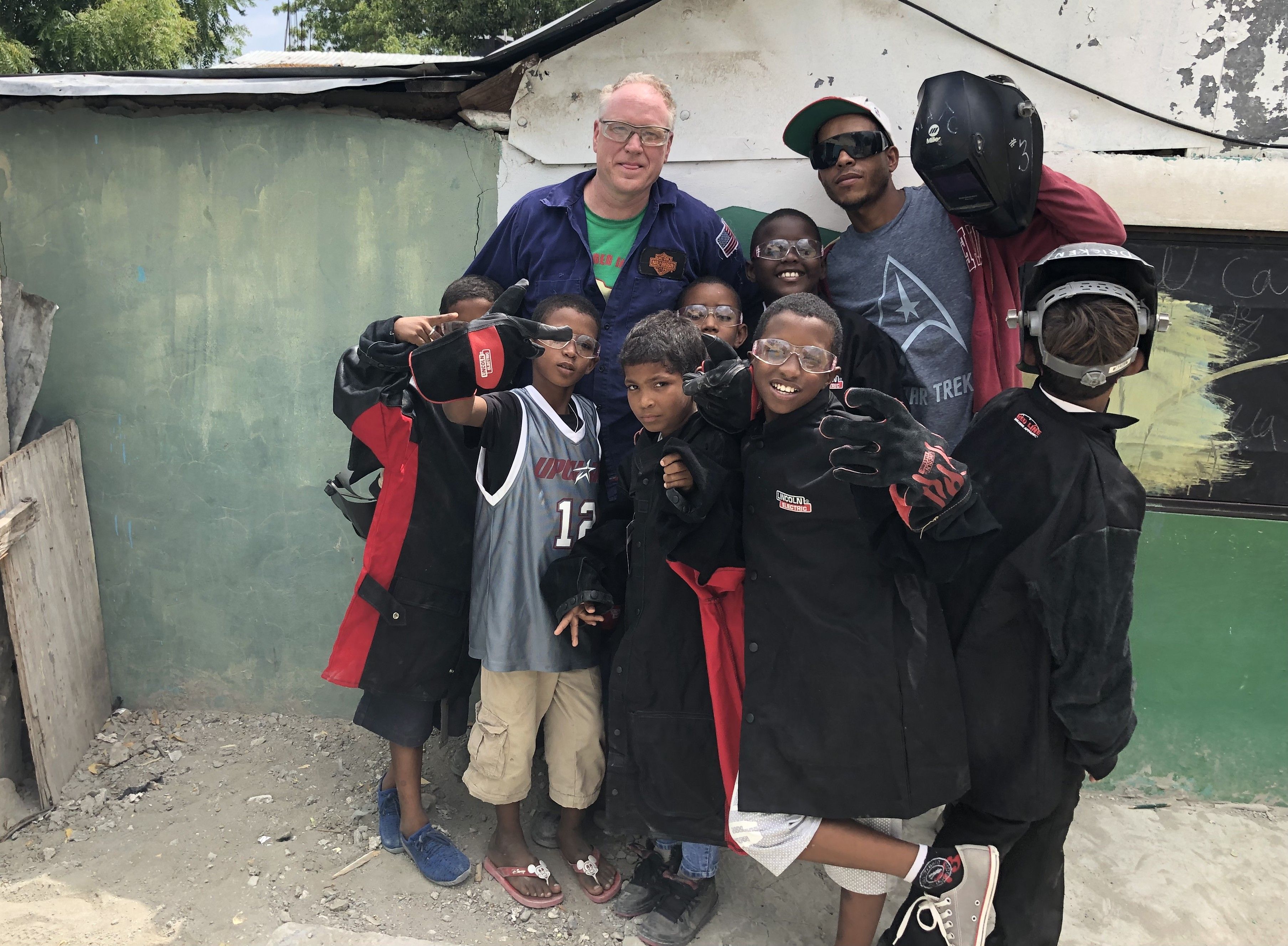
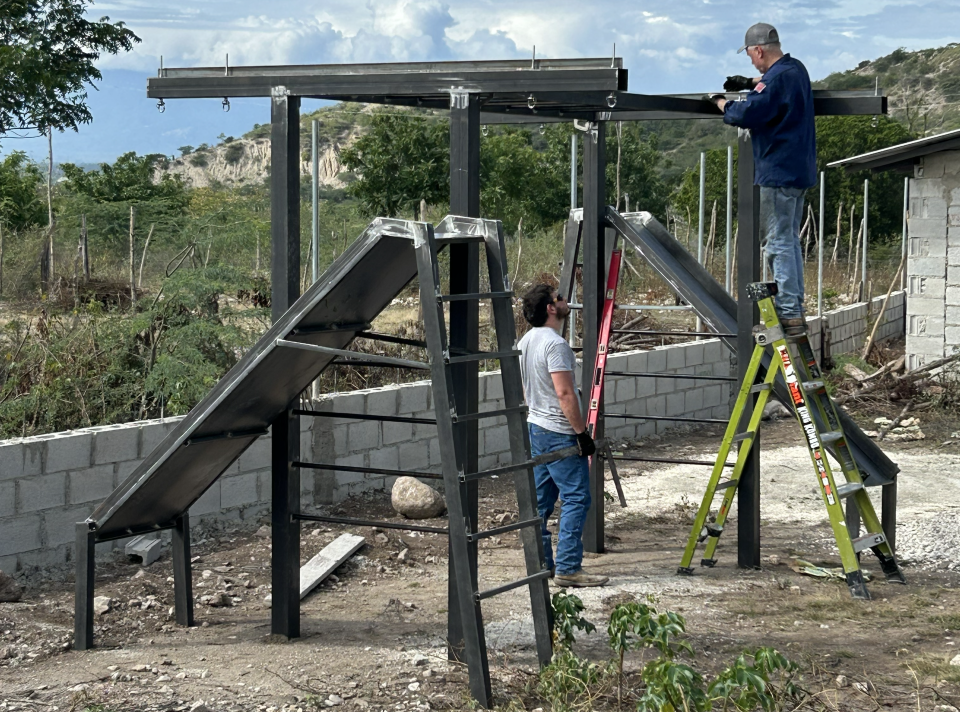
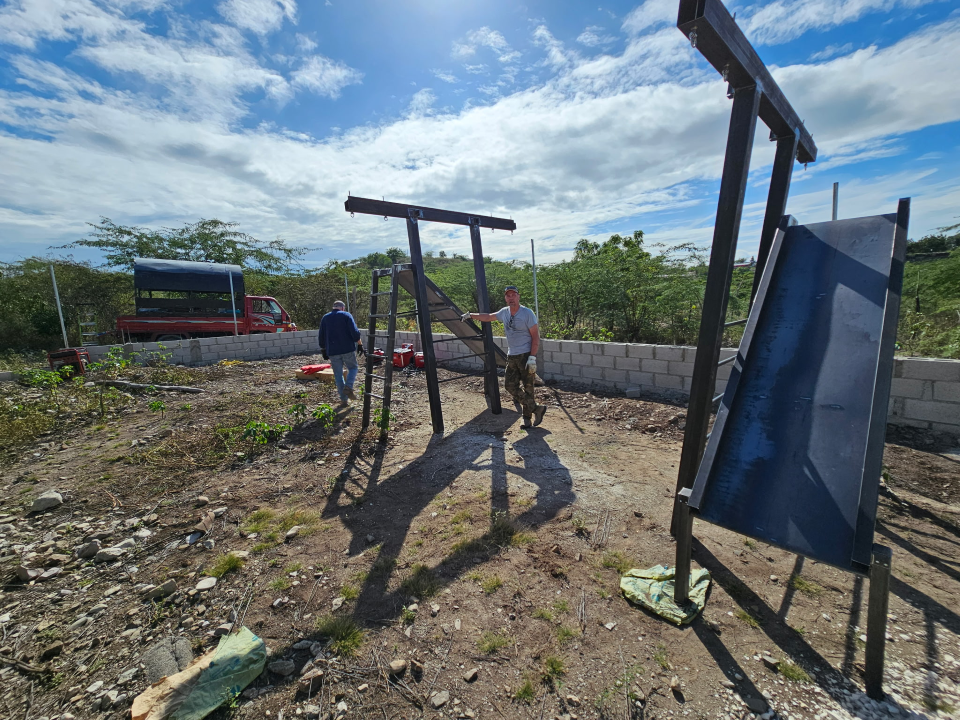
Iwanski, along with other American volunteers, teaches welding classes, pours concrete, erects walls, builds structures — just about anything the church needs.
The volunteers come from numerous churches in southeastern Wisconsin, including Elmbrook Church in Brookfield.
“I went the first year because I wasn’t teaching any classes during the summer,” Iwanski said. “Then I went the next year and then it became a yearly thing. I thought it might be a good way to help.”
Traveling south
Getting to the Dominican Republic from Milwaukee takes almost a full day. Travelers fly from Milwaukee to either Atlanta or Miami, then on to Santa Domingo, the capital city. A bus takes the volunteers the rest of the way, slowly pushing away from the posh coastline and into the rough interior of the country.
“Houses are the size of one-car garages,” Iwanski said. “It can take four or five years to build them. Some are made block by block. One guy split 55-gallon drums, hammered them flat and constructed an entire house. It was amazing.”
In the past decade, Iwanski and the other volunteers have transformed the church and surrounding neighborhood by:
- Building a 50-foot-by-85-foot basketball court, a project that required 900 wheelbarrows of concrete to be brought in and poured by hand.
- Replacing a leaking roof on one of the school’s buildings.
- Installing a new water chlorination and filtration system.
- Constructing an outreach center on a remote stretch of land to reach more residents.
- Assembling a new playground with equipment secured from Kids Around the World, a nonprofit that establishes playgrounds in impoverished communities worldwide.
- Converting a shipping container full of donated supplies into a storage facility and workshop.
- Constructing a trade center where students can learn welding, sewing and cooking. The center includes a workshop, a multiuse area and a kitchen.
“It’s night and day between how it looked when I first saw it to today,” he said.
The young residents are keenly interested in welding, Iwanski said. They intently watch the volunteers at work, then use sticks to pretend they are welding, he said.
Hands for Hope donated some protective equipment so the youngsters could safely learn the trade.
“No one has any welding helmets or goggles to wear while welding. Kids would use their hands to shield their eyes,” Iwanski said. “By the time they’re old enough to make welding their job, they can’t see.”
At night, the volunteers slept in small dorm buildings. Church members cooked meals for them. During some trips, electricity was a gamble, Iwanski remembered. The power was shut off every day between midnight and 6 a.m., then again from noon to 4 p.m., he said.
While Iwanski said he almost always felt safe on his trips, the missions weren’t without risk. On this year’s journey he came down with COVID. As a result, his wife banned him from taking trips during flu season.
Iwanski might return this summer and is scheduled to go in April 2027; he’s always looking for fellow MATC instructors and welding students to come along.
Representing MATC
Iwanski’s mission trips exemplify what it means to be a welder and an educator, said Karen Feliciano, instructional chair of MATC’s Welding department.
“He is skillfully blending technical expertise with compassion,“ Feliciano said. “His willingness to share his craft with communities that have so little reflects a servant’s heart and a deep belief in the transformative power of education.
“His example reinforces the strength of the MATC Welding program, not just as a place that teaches skills but as a program that builds character, community and global awareness. His work abroad reflects the hands-on, people-centered values we champion here every day,” she added.
“Whether he’s in the welding lab at MATC or building projects in the Dominican Republic, Darrel’s work is driven by respect — for people, for craft and for community,” she said. “He represents the kind of instructor who makes students and colleagues proud.”
Anyone interested in volunteering for mission trips can contact Darrel Iwanski at iwanskid@matc.edu
Learn more about MATC’s Welding program
About MATC: Wisconsin’s largest technical college and one of the most diverse two-year institutions in the Midwest, Milwaukee Area Technical College is a key driver of southeastern Wisconsin’s economy and has provided innovative education in the region since 1912. More than 35,000 students per year attend the college’s four campuses and community-based sites or learn online. MATC offers affordable and accessible education and training opportunities that empower and transform lives in the community. The college offers more than 180 academic programs — many that prepare students for jobs immediately upon completion and others that provide transfer options leading to bachelor’s degrees with more than 45 four-year colleges and universities. Overwhelmingly, MATC graduates build careers and businesses in southeastern Wisconsin. The college is accredited by the Higher Learning Commission.