

This happens only once a year. You don’t want to lose this opportunity.

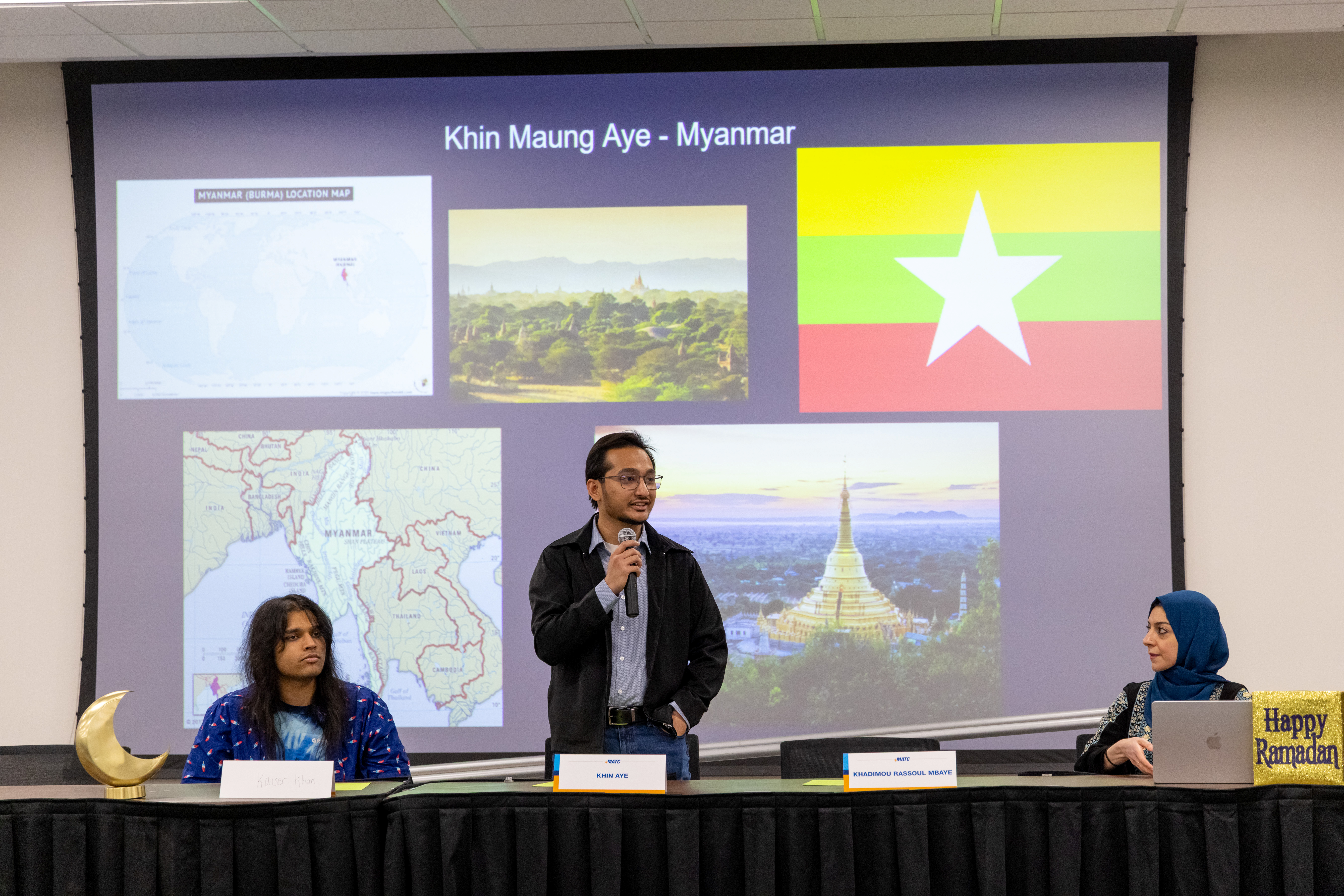
For Khin Aye, observing Ramadan so far away from family and friends just hits different.
Fasting, praying and reflecting during one of the holiest months of the year for Muslims isn’t the same in Milwaukee as it was in his native Myanmar.
“To be honest, I miss my mother’s food,” said Aye, who came to the United States three years ago. “Being here, I have needed to manage my schedule and my eating all on my own. I’m proud that I haven’t missed any of my fasting.”
Aye also received some welcome support from Milwaukee Area Technical College, where he earned an associate degree in Civil Engineering Technology in December 2025.
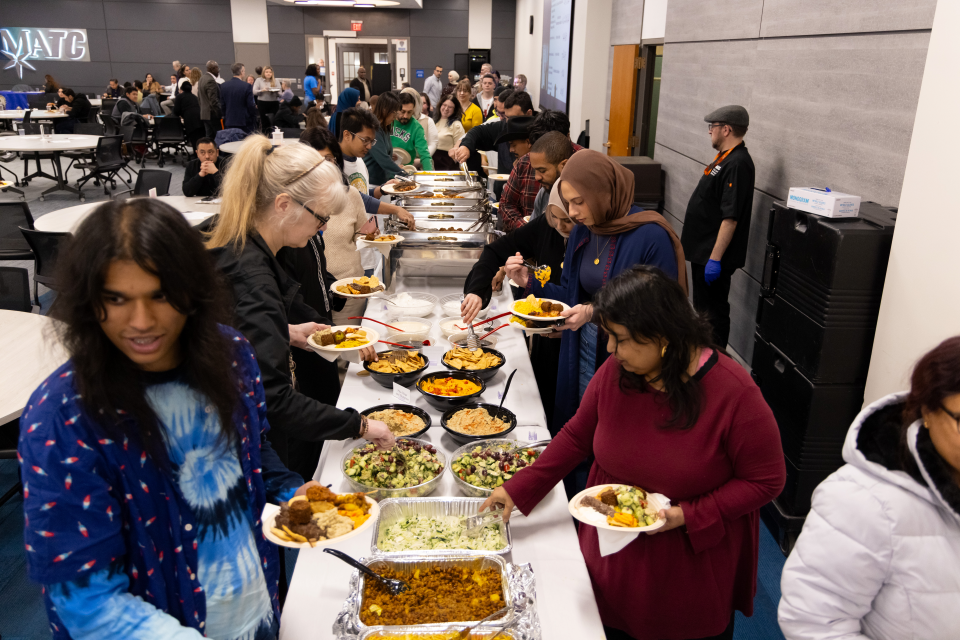
The college has designated prayer rooms at every campus for Muslim students and staff. This week, the college hosted iftars — the nightly meal that breaks the daily Ramadan fast — at two campuses.
Nearly 200 MATC students, faculty and staff, along with community members, shared iftar at the Oak Creek Campus on Monday, March 9, and another 150 gathered at the Downtown Milwaukee Campus on Tuesday, March 10.
At the events, MATC Muslim students and staff shared their Ramadan experiences.
“Ramadan looks different in different places of the world,” said Bara Omari, the college’s instructional chair of the English as a Second Language department and organizer of the two iftars.
Omari was born in Milwaukee, but her parents came to the United States from Jordan. She spent her first two years of high school in Jordan. “There, life revolved around Ramadan,” she said.
Ramadan is the ninth month of the Islamic calendar and is observed by Muslims worldwide with fasting, communal prayer, reflection and community. It is also the month in which the Quran is believed to have been revealed to the Prophet Muhammad.
This year, Ramadan runs from Tuesday, February 17, to Thursday, March 19.
During that time, Muslims fast daily. They eat only before sunrise, a meal called suhur, and after sunset, a meal called iftar.
The end of Ramadan is celebrated with a major holiday called Eid al-Fitr. Children traditionally receive new clothes or money. Special prayers and sermons are held in the morning, followed by community celebrations.
The month of Ramadan is designed to cultivate self-control, gratitude and compassion for those less fortunate.
“The idea is to try and be a good person to others,” said Dr. Sadique Isahaku, vice provost for learning, who grew up Muslim in Nigeria. “This time reminds us of the importance of compassion, discipline and humility.”
The evening meal of iftar also strengthens the sense of community and creates a sense of belonging, Dr. Isahaku said. “It’s a space for all of us to enjoy each other,” he said.
MATC student Kaisar Khan was born in Chicago but as a child spent almost every Ramadan with his grandparents in India. “The vibe there is totally different,” he told the audience. “The entire city is fasting with you. Shops are open late so you can shop after iftar.”
Khan also has found support at MATC: One of his chemistry instructors is Muslim and during Ramadan he schedules class breaks to coincide with sunset so everyone can break their fasts, Khan said.
“It’s little accommodations like that that make it easier for everyone,” Khan said.
That gladdened MATC President Dr. Anthony Cruz, who attended Tuesday’s iftar. “When we can come together to learn more about other people and other cultures, we can grow as individuals,” Dr. Cruz said. “It’s also good to hear that we provide the support that our students, faculty and staff need during this time.”
Preparing for Ramadan isn’t easy, Omari said. “Weeks before it begins, I make sure that I have all the foods I need,” she said. “I love coffee, and I have to work to wean myself off of that.”
Khan said his family would start weeks in advance. “As Ramadan gets closer, you start going to sleep earlier and earlier to get your body ready,” he said. “You have to learn to make the food you get early in the day last all day. And when you have that first bite of food when you break the fast, you know it’s been worth it.”
Aye said he tries to stay as healthy as possible in the weeks leading up Ramadan to ward off fatigue and headaches. “This happens only once a year,” he said. “You don’t want to lose this opportunity.”
About MATC: As Wisconsin’s largest technical college and one of the most diverse two-year institutions in the Midwest, Milwaukee Area Technical College is a key driver of southeastern Wisconsin’s economy and has provided innovative education in the region since 1912. More than 35,000 students per year attend the college’s four campuses and community-based sites or learn online. MATC offers affordable and accessible education and training opportunities that empower and transform lives in the community. The college offers more than 180 academic programs — many that prepare students for jobs immediately upon completion and others that provide transfer options leading to bachelor’s degrees with more than 45 four-year colleges and universities. Overwhelmingly, MATC graduates build careers and businesses in southeastern Wisconsin. The college is accredited by the Higher Learning Commission.