

Our aim is to build a pipeline of talent that employers can hire right away.

Someday, Molly Corp might win a Nobel Prize for medicine.
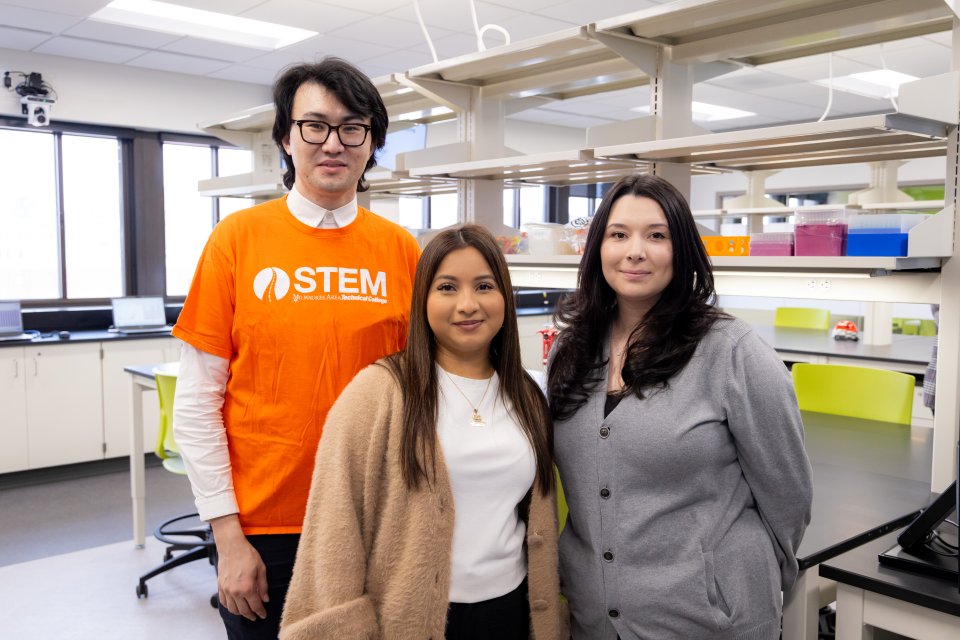
If that happens, she can look back and say her success started in Milwaukee Area Technical College’s Biotechnology Laboratory Technician program, which is being offered for the first time in the Spring 2026 semester.
“I want to be in a field where I can help people in a laboratory setting,” said Corp, one of the first eight students starting the program this month. “There are so many things that you can do in this program. In biotech, the sky is the limit.”
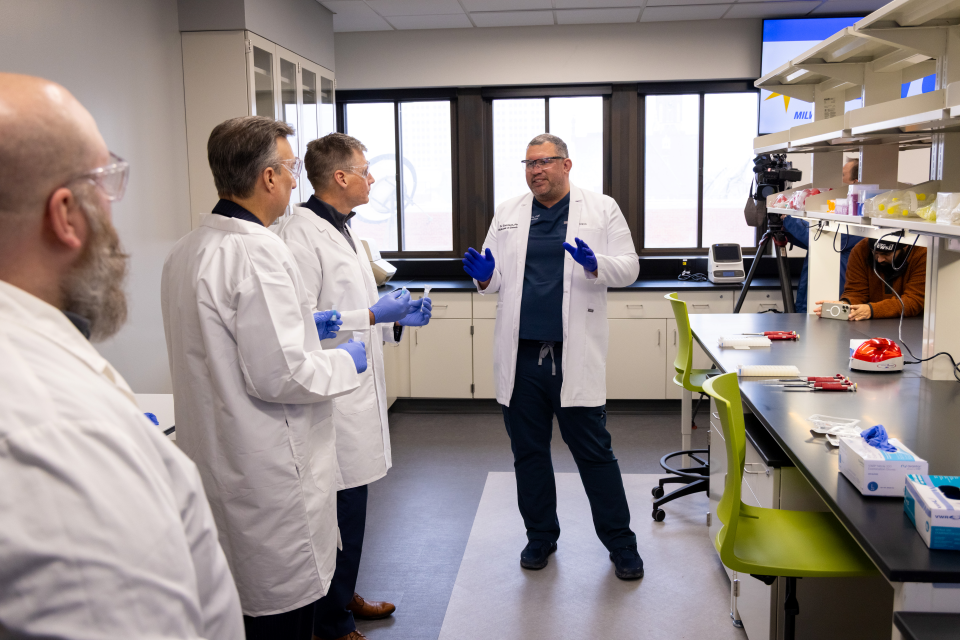
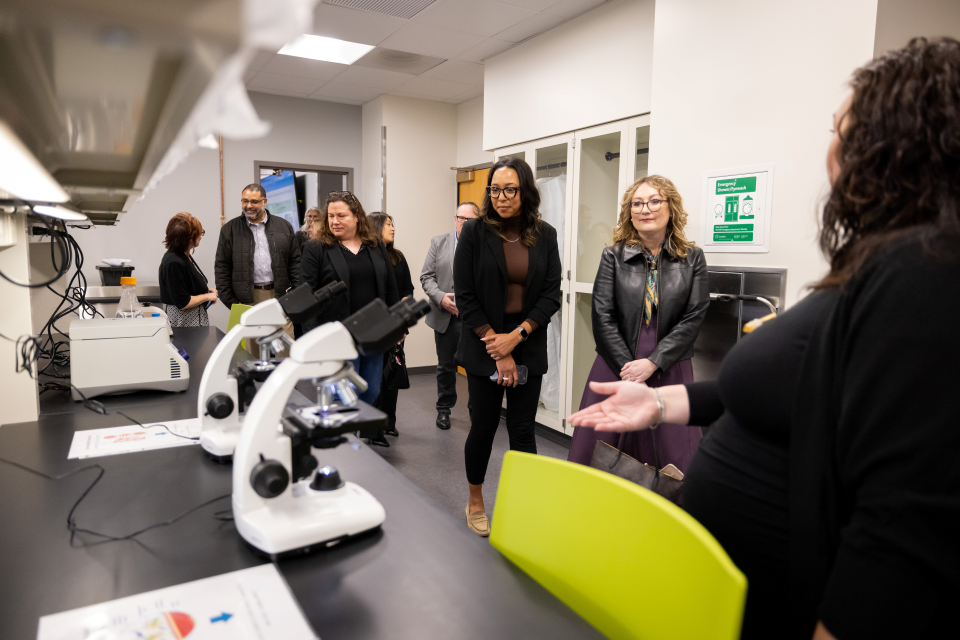
Corp and other MATC students, faculty, staff, area employers and guests celebrated the new program Wednesday, January 14, by unveiling a new biotechnology lab and classroom space at the college’s Downtown Milwaukee Campus.
“The emerging biohealth economy is incredibly exciting,” Dr. Anthony Cruz, MATC’s president, told the crowd. “We are eager to work with industry leaders and build on our existing collaboration with our regional partners to scale our collective expertise and support biohealth initiatives.
“This is a landmark moment for the college,” Dr. Cruz added.
See media coverage of the event
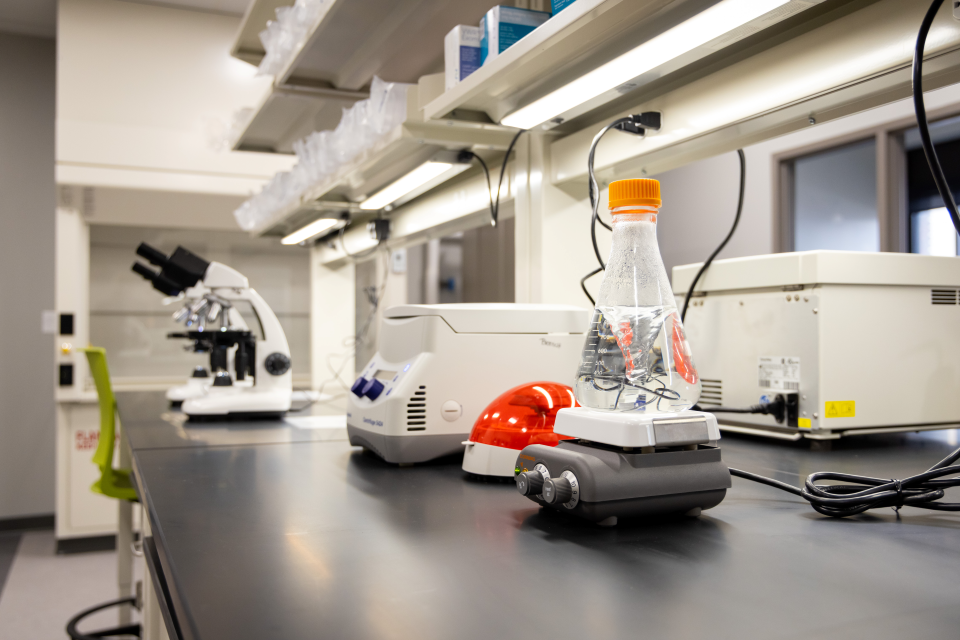
The college remodeled an area on the sixth floor of the Main Building to create a 2,000-square-foot lab and classroom. In the space, students will gain specialized training in health-related and biomedical courses as well as general education, biology, anatomy, chemistry, and other biotech and biohealth-related classes.
The lab also includes dedicated spaces for advanced computer technology that will integrate artificial intelligence and virtual reality.
In the new associate degree program, students will master industry-standard techniques used for precision medicine, drug development, molecular biology, genetics and bioprocessing. They also will gain the technical, regulatory and safety skills that are essential for laboratory and industrial settings and in high demand by employers.
“Biotechnology laboratory technicians have been identified as an employment area with a large gap between need and trained workforce,” said Dr. Abigail Cannon, director of MATC’s biohealth career pathway. “We hope this new space and new program will attract young adults, workers from other industries and employees looking to upskill their credentials. Our aim is to build a pipeline of talent that employers can hire right away.”
Students completing the program can be hired by regional medical centers, research universities and biohealth firms as medical and clinical laboratory technologists, biological technicians, and bioinformatics technicians — careers that contribute meaningfully to advances in medicine and product development, said Dr. Sheldon Garrison, lead faculty of the biotechnology program.
Corp and classmate Carla Hinojosa started taking classes at MATC in the fall of 2024. They had hoped to enroll in the Cardiovascular Technology – Echocardiography program, but there was a waiting list. They heard about the biotechnology program from Dr. Garrison, who was recruiting students to enroll.
“I’m excited to try this new program,” said Hinojosa, who graduated from Veritas High School in June 2024.
The new biotechnology lab and program were developed in partnership with the Wisconsin Biohealth Tech Hub, which is being funded with a $49 million federal grant, $7.5 million from the state and $24 million from industry partners.
“We wanted to have a program like this even before the grant,” said Dr. Michael Jenkins, dean of the college’s STEM Academic and Career Pathway. “With the grant, Wisconsin can become the precision medicine center of the United States.”
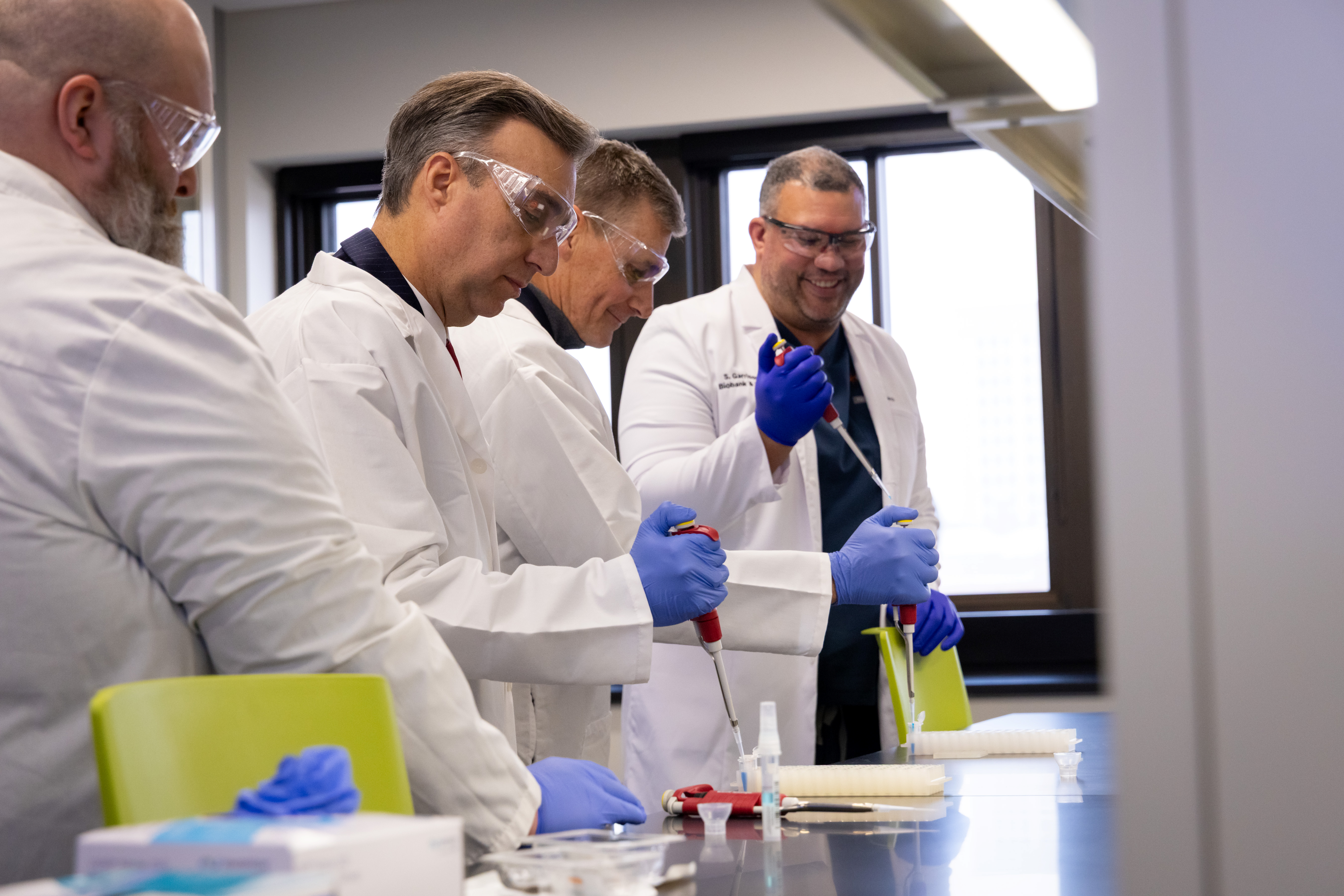
As part of Wednesday’s event, Dr. Cruz, Dr. Jenkins and Dr. Garrison donned white coats and worked with some of the new lab’s DNA testing equipment.
“We’re preparing people for careers, but careers need purpose,” Dr. Garrison said. “And our purpose is saving lives and improving lives.”
Learn more about MATC’s Biotechnology Laboratory Technician program
About MATC: Wisconsin’s largest technical college and one of the most diverse two-year institutions in the Midwest, Milwaukee Area Technical College is a key driver of southeastern Wisconsin’s economy and has provided innovative education in the region since 1912. More than 30,000 students per year attend the college’s four campuses and community-based sites or learn online. MATC offers affordable and accessible education and training opportunities that empower and transform lives in the community. The college offers more than 180 academic programs — many that prepare students for jobs immediately upon completion and others that provide transfer options leading to bachelor’s degrees with more than 40 four-year colleges and universities. Overwhelmingly, MATC graduates build careers and businesses in southeastern Wisconsin. The college is accredited by the Higher Learning Commission.